Is Oxford Gold Group Legit? How to Verify Before You Buy
"Is this company legit?" is the right question — but the reliable answer comes from primary sources, not a single review. This page shows retirement savers how to verify Oxford Gold Group's public record, fees, and pricing before committing any money.
Disclosure: This page is educational only and does not provide financial, legal, or tax advice. It describes how to verify a company's public record and does not assert unverified facts about any business. Readers should confirm all details directly with the company and the primary sources named below. Past performance does not guarantee future results.
Quick Answer
The most dependable way to decide whether Oxford Gold Group — or any precious-metals company — is right for you is to check the same public signals every time: the Better Business Bureau profile, any securities-regulator or consumer-protection records, independent media coverage, and the written fee, pricing, and buyback terms the company will provide before a sale. A single "legit or not" verdict is less useful than knowing how to run these checks yourself, because the answer depends on facts that change over time and on your own situation.
Step 1 — Check the BBB profile and reviews
Search the company on bbb.org and note the letter rating, accreditation status, the number and type of complaints, and how the company responded. Then scan independent review platforms for recurring themes rather than one-off stars. Record the date you checked — ratings and complaint counts move over time, so a claim from an old article may no longer be accurate.
Step 2 — Search the regulator and media record
Check for any securities-regulator, CFTC, FTC, or state-level activity, and for independent journalism about the company. Use the SEC's Investor.gov, FINRA BrokerCheck, the CFTC and National Futures Association databases, and a web search of the company name with terms like "complaint," "investigation," or "lawsuit." Always read the primary source, and confirm any coverage actually concerns this specific company. For context on how precious-metals enforcement actions typically look, see the Gold IRA scam & enforcement tracker.
Step 3 — Pin down pricing and fees in writing
The biggest risk in precious-metals buying is the markup baked into the product price. Ask for the exact products, weights, and IRA eligibility, the price against a same-day spot reference, and the premium over spot — then every recurring fee and the buyback estimate. Compare the premium to typical ranges: standard bullion is usually a few percent to about ten percent over spot, while high-premium coins run far higher. The benchmarks are on the dealer markup data page, and the full cost picture is on the fees benchmark.
Step 4 — Watch for the recurring red flags
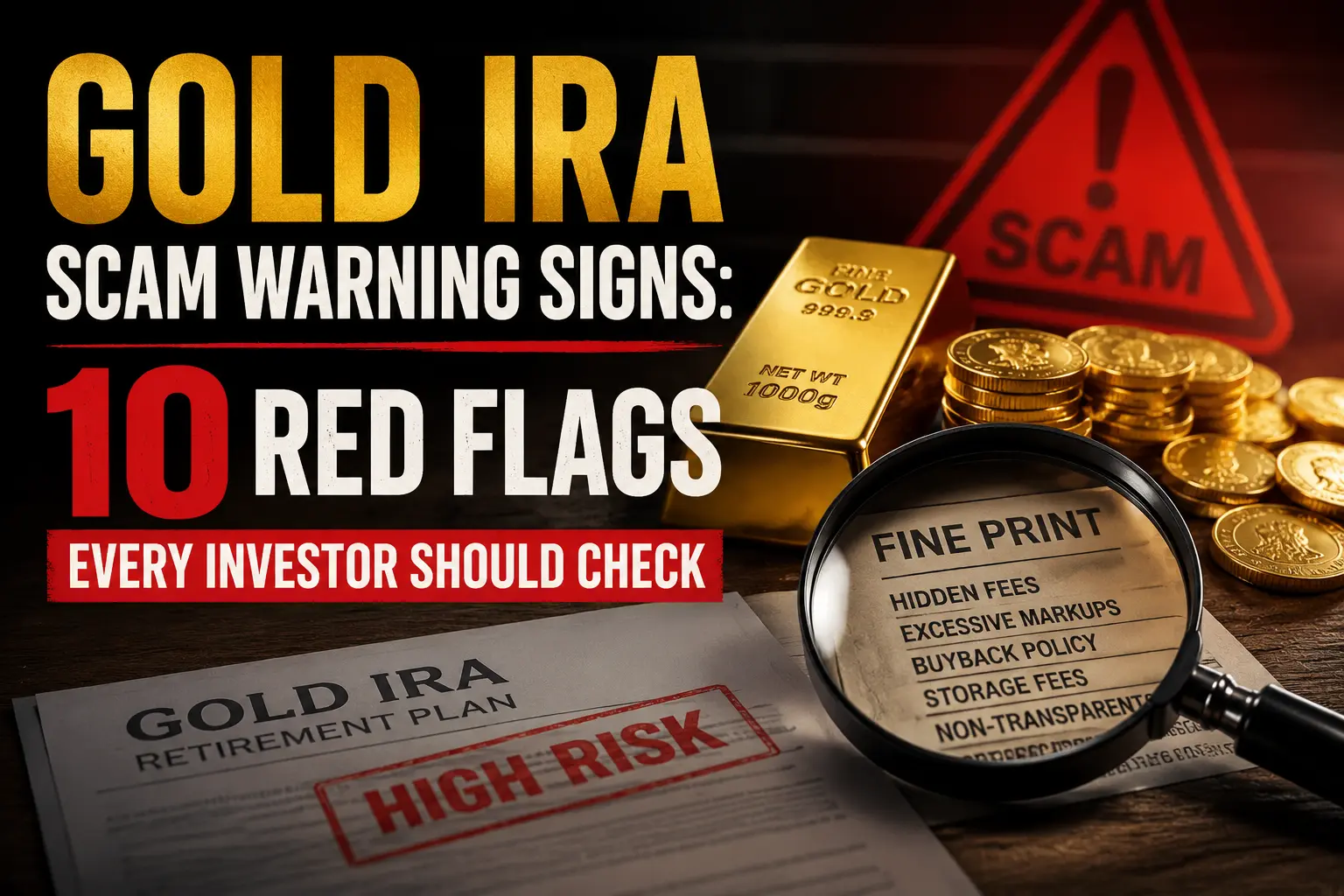
Regardless of company, the same tactics recur across enforcement actions: fear-based urgency, a bullion quote that turns into a steer toward high-markup coins, "free silver" offers that mask the markup, and claims that IRA metals can be stored at home. The complete list is on the scam warning signs and free silver warning pages.
How to research alternatives
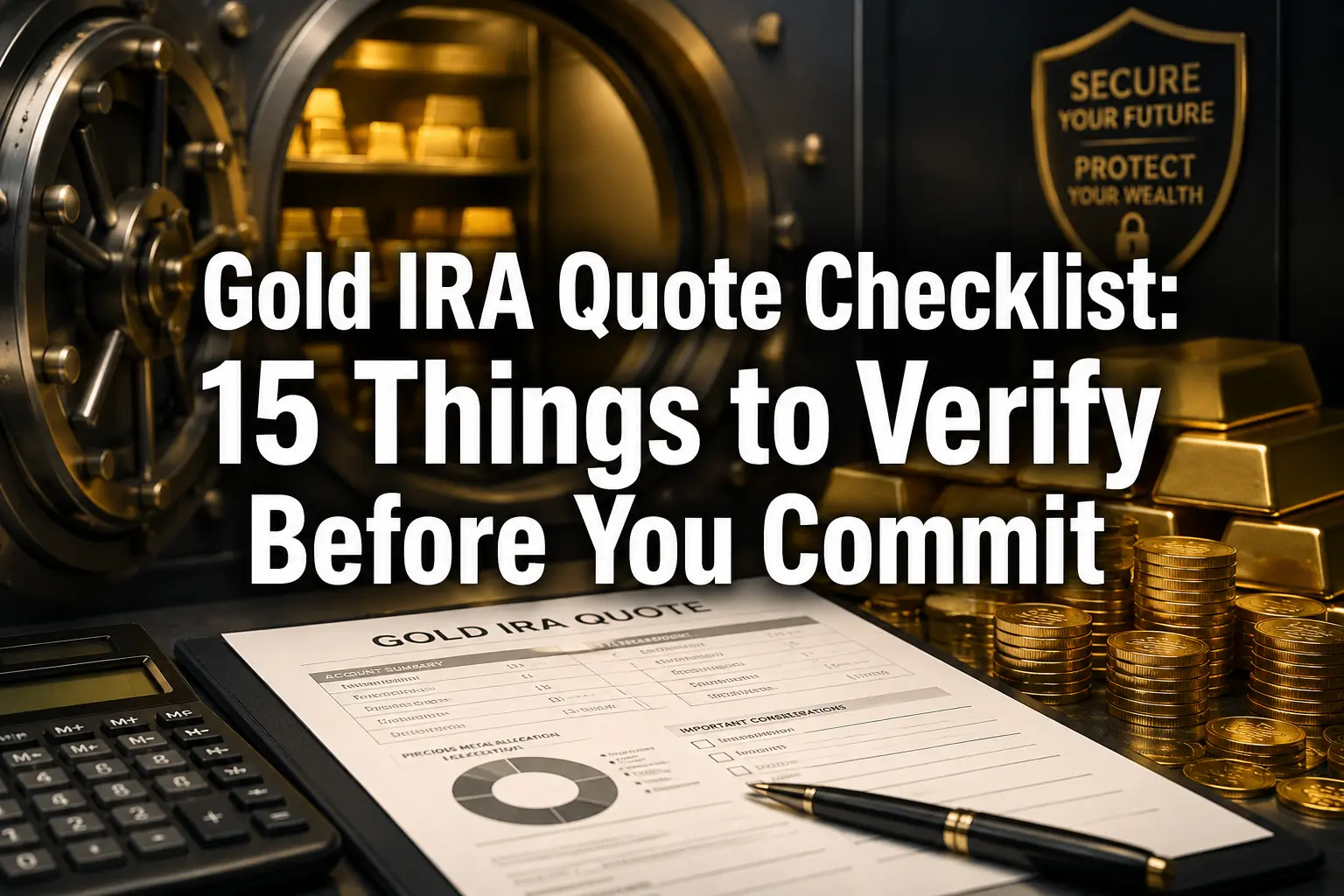
If the checks leave you uncertain, compare against the providers reviewed here using sourced data rather than marketing. The best Gold IRA companies comparison and the quote checklist give a structured way to line up any company against its peers. Customers should speak to a financial or tax advisor before making decisions.
Methodology
This page is written as a verification framework rather than a fixed verdict, because whether a company is "legit" for a given buyer depends on its current public record and the specific terms offered — both of which change over time and should be confirmed from primary sources. Where this site states a specific figure about a named company elsewhere, it is sourced to that company's own materials or a public record. Treat any single review, including this one, as one input among several.
Frequently Asked Questions
Is Oxford Gold Group legit?
The reliable way to answer this is to check primary sources yourself: the company's BBB profile, any securities-regulator or consumer-protection records, independent media coverage, and the written fee, pricing, and buyback terms the company provides. This page explains how to run each check rather than substituting a single verdict for your own research.
How do I verify any gold IRA company?
Check the SEC's Investor.gov and FINRA BrokerCheck, the CFTC and National Futures Association, the FTC, and state securities regulators. Review the BBB profile, confirm the custodian and depository, and get every fee and the buyback estimate in writing before funding.
What are the biggest risks with a precious-metals dealer?
The largest and least visible risk is the dealer markup embedded in the product price, especially on high-premium "exclusive" or proof coins. Other risks include weak buyback terms, fear-based sales pressure, and illegal home-storage pitches.
Article reviewed and edited by Daniel M. — editor, 401kToGoldIRA.org.