Affiliate disclosure: Some links on this page may be sponsor links. The site owners may be compensated if customers request information from companies mentioned here. This page is educational only and does not provide financial, tax, or legal advice. Customers should verify any company directly with regulators and licensed professionals. Past performance does not guarantee future results.
Quick Answer: The Biggest Gold IRA Warning Signs
The most common Gold IRA scams and unsuitable sales practices often share a few core traits.
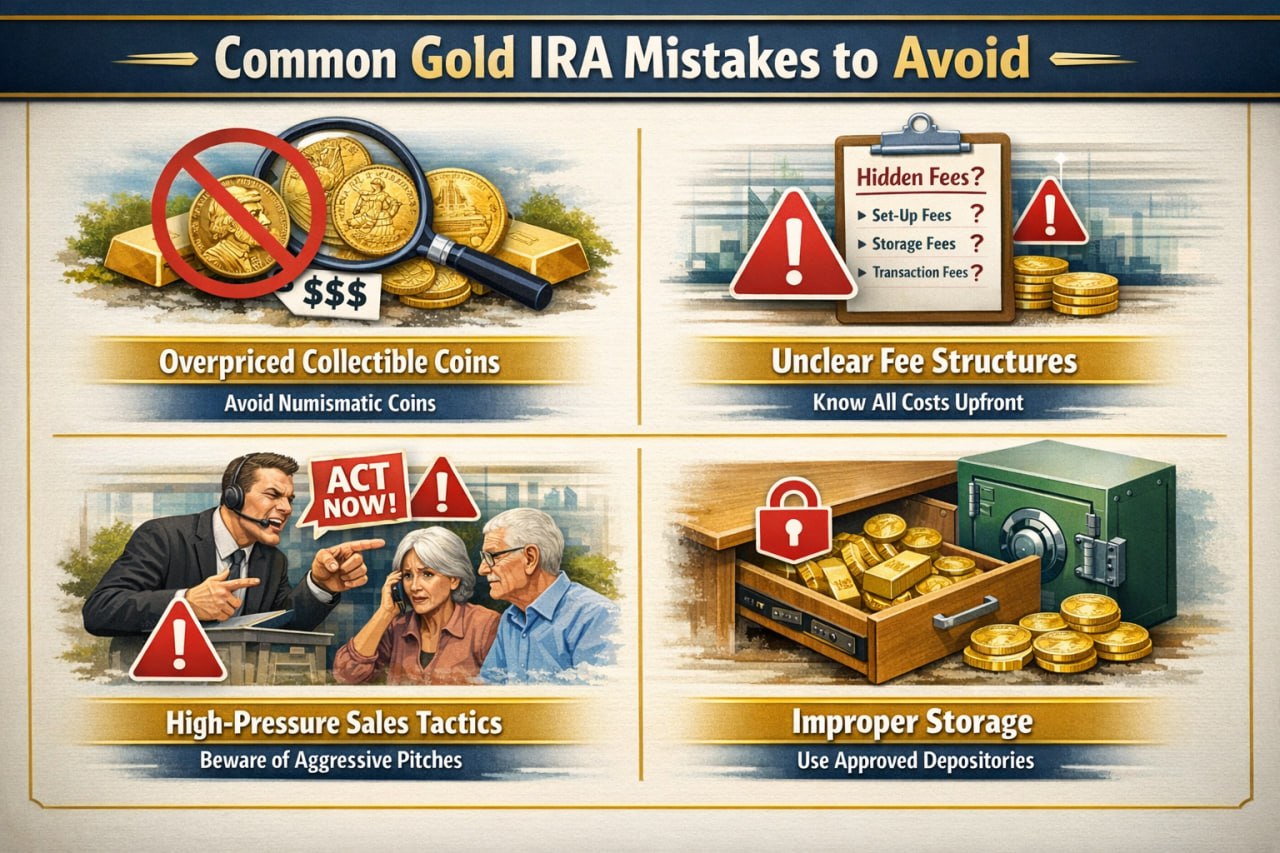
- Promises of guaranteed returns or "risk-free" results rather than clear discussion of volatility and long-term risk.
- High-pressure sales that push investors to act immediately, often tied to dramatic claims about the economy or currency.
- Vague or hidden fees and unclear markup on coins and bars, especially when "free silver" or other incentives are advertised.
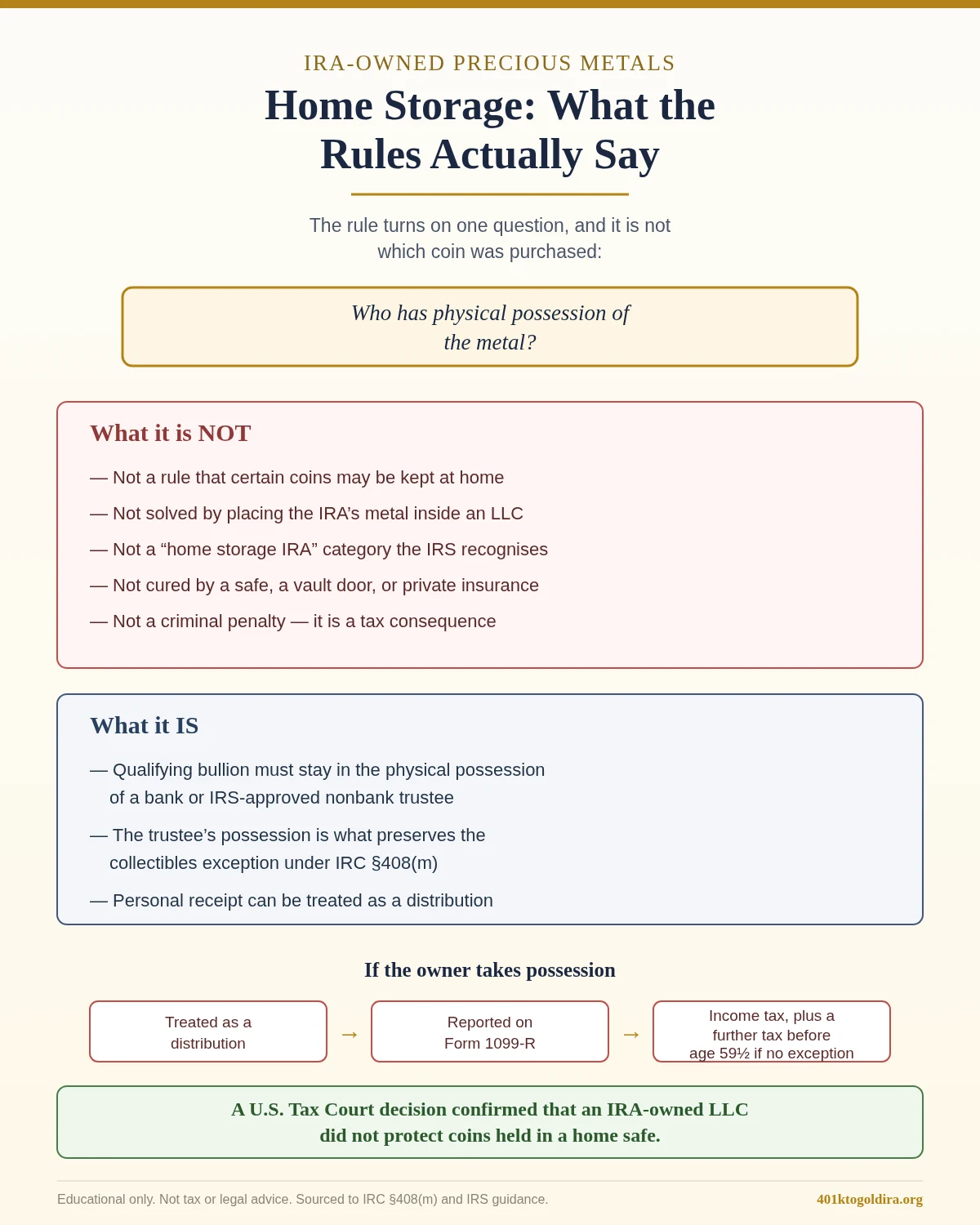
- Confusing statements about storage, custodians, and depositories, including pitches that imply home storage is acceptable inside an IRA.
- Poor complaint handling in public records, such as unresolved BBB complaints or actions by regulators or state attorneys general.
Each of these warning signs is not always proof of fraud, but each is a risk factor that requires more research, careful documentation, and often discussion with licensed financial, tax, or legal professionals.
Why Gold IRA Scams and Unsuitable Sales Can Be Hard to Spot
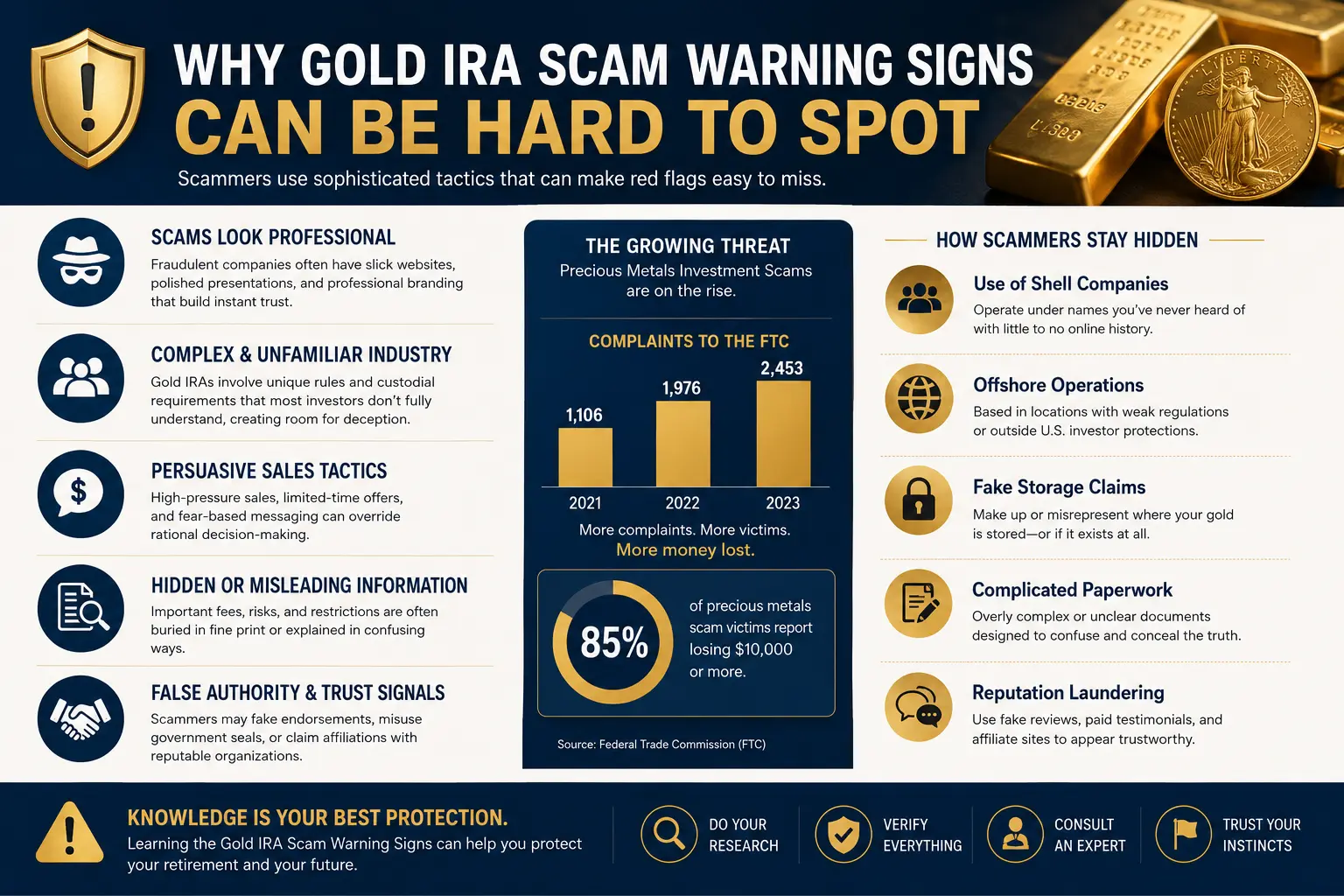
Gold IRA offers typically combine technical retirement plan rules, complex fee structures, and emotional messaging about economic uncertainty, which makes it hard for many investors to separate fact from sales talk. The Commodity Futures Trading Commission (CFTC), SEC, FINRA, and other regulators note that precious metals IRA frauds frequently target older workers and retirees because they often have larger tax-advantaged balances and may be more vulnerable to persuasive telemarketing.
Retail precious metals dealers themselves are not always regulated at the federal level, which means responsibility for due diligence falls heavily on the investor and the chosen IRA custodian. Scams and unsuitable sales often blend legitimate elements (such as real gold coins and IRS-approved custodians) with misleading price claims, confusing leverage, or advice that goes beyond what a salesperson is allowed to provide.
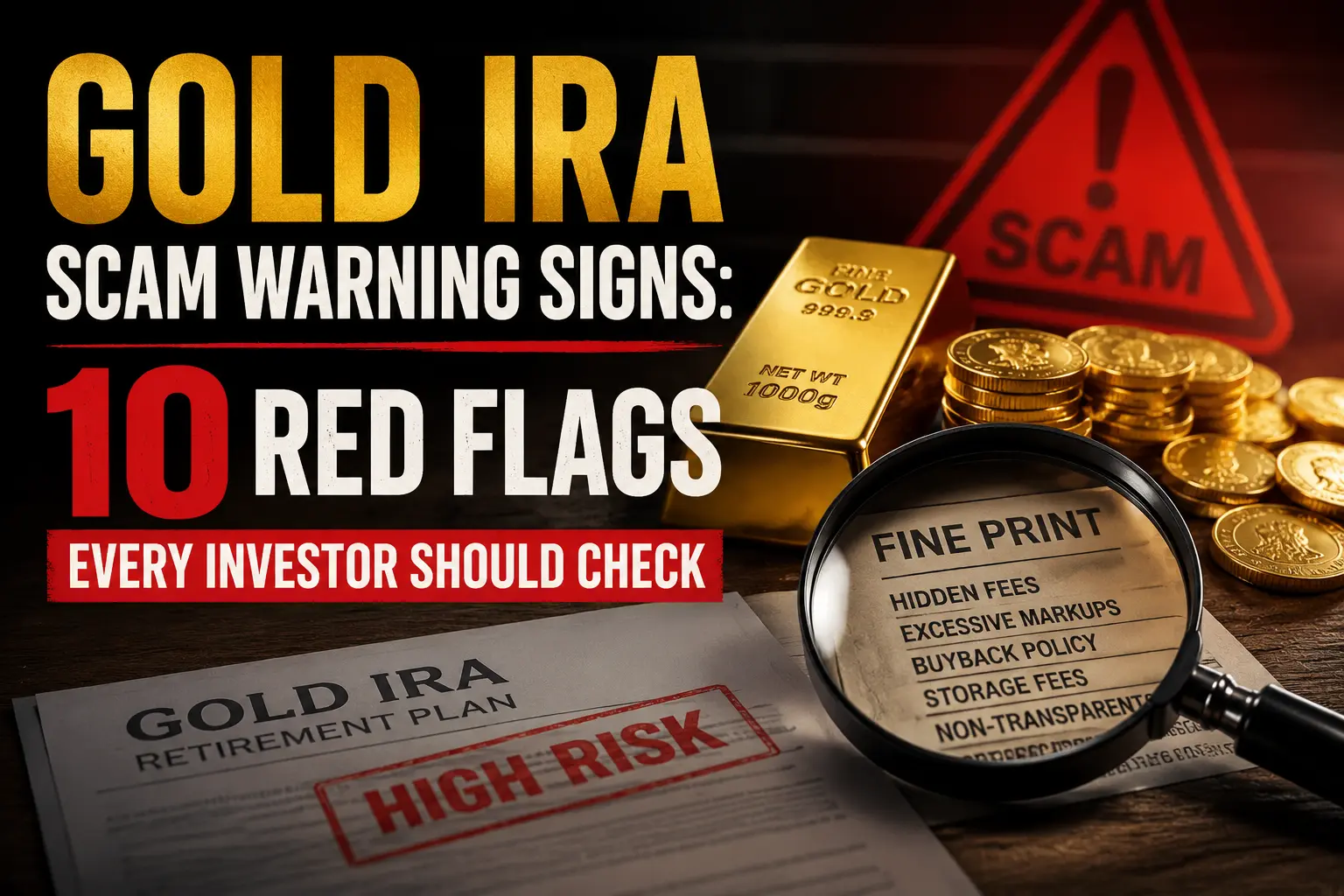
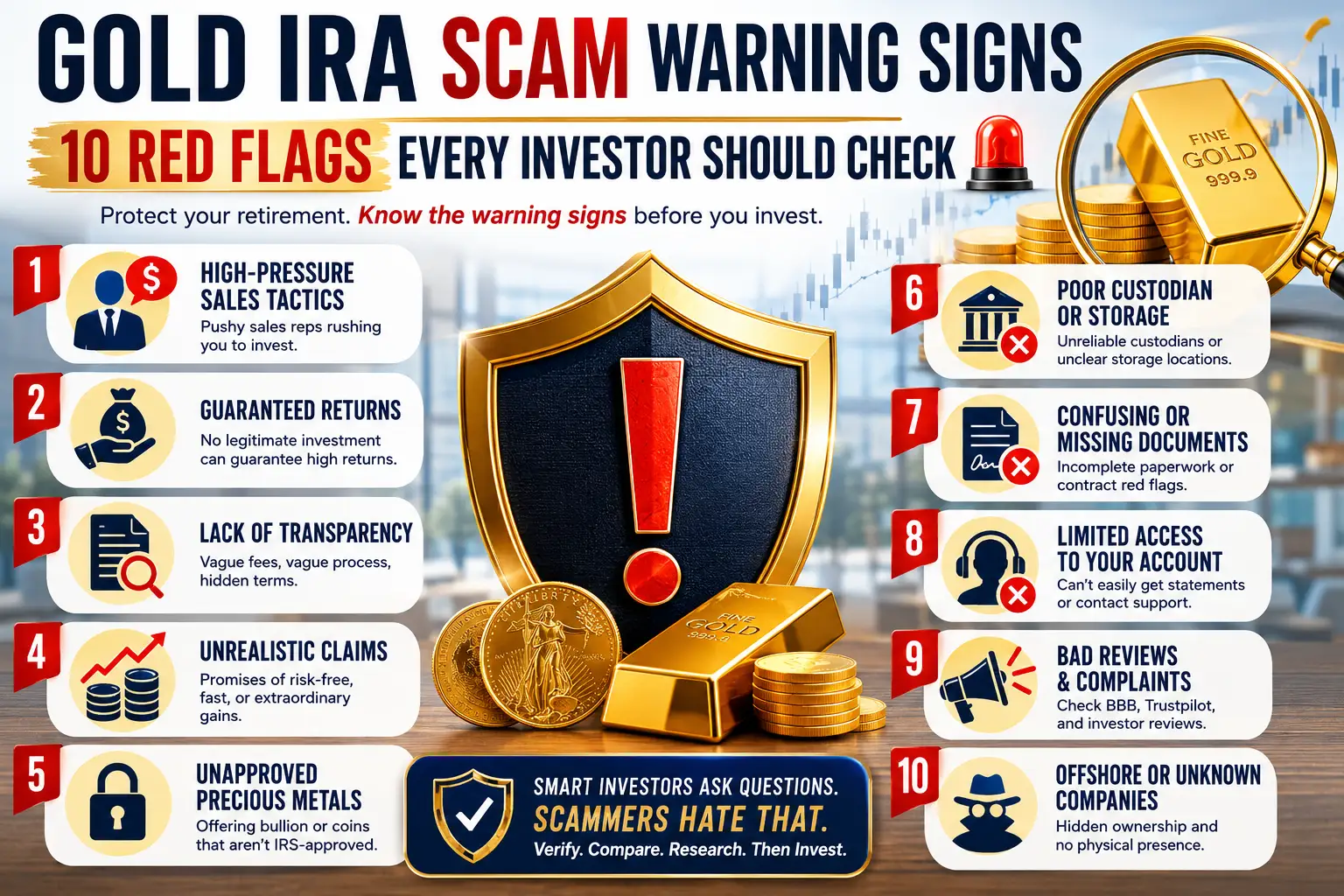
10 Gold IRA Scam Warning Signs Every Investor Should Check
This section explains the 10 most common gold IRA scam warning signs and how each can appear in real-world offers. Each warning sign is a reason to slow down, gather documents, and compare alternative providers before moving retirement funds.
1. Guaranteed returns
Regulators flag any investment pitch that suggests guaranteed returns, "risk-free" profits, or unusually high gains with little downside as a core red flag. Gold and other precious metals can rise or fall based on market conditions, and even long periods of strong performance do not eliminate future volatility. Past performance does not guarantee future results.
In guidance on precious metals fraud, the CFTC and SEC emphasize that fraudsters often build their stories around recent news, gold price moves, or economic concerns, then promise steady gains or protection that no metal or IRA structure can actually assure. When a Gold IRA salesperson focuses on "guaranteed" outcomes rather than risks, diversification, and full written disclosures, that pattern is a significant warning sign that requires more research.
2. Pressure to act immediately
Aggressive sales pressure is one of the clearest Gold IRA red flags. Common examples include repeated calls urging investors to move all retirement savings "right now," claims that a special offer will disappear within hours, or statements that delaying a purchase will lead to severe financial harm.
The FTC, CFTC, and FINRA all advise investors not to respond to cold calls, unsolicited emails, late-night commercials, or urgent social media pitches that push precious metals purchases or Gold IRA rollovers. Legitimate firms should allow time to review documents, consult independent advisors, and compare offers rather than insisting on immediate decisions.
3. Vague or hidden fees
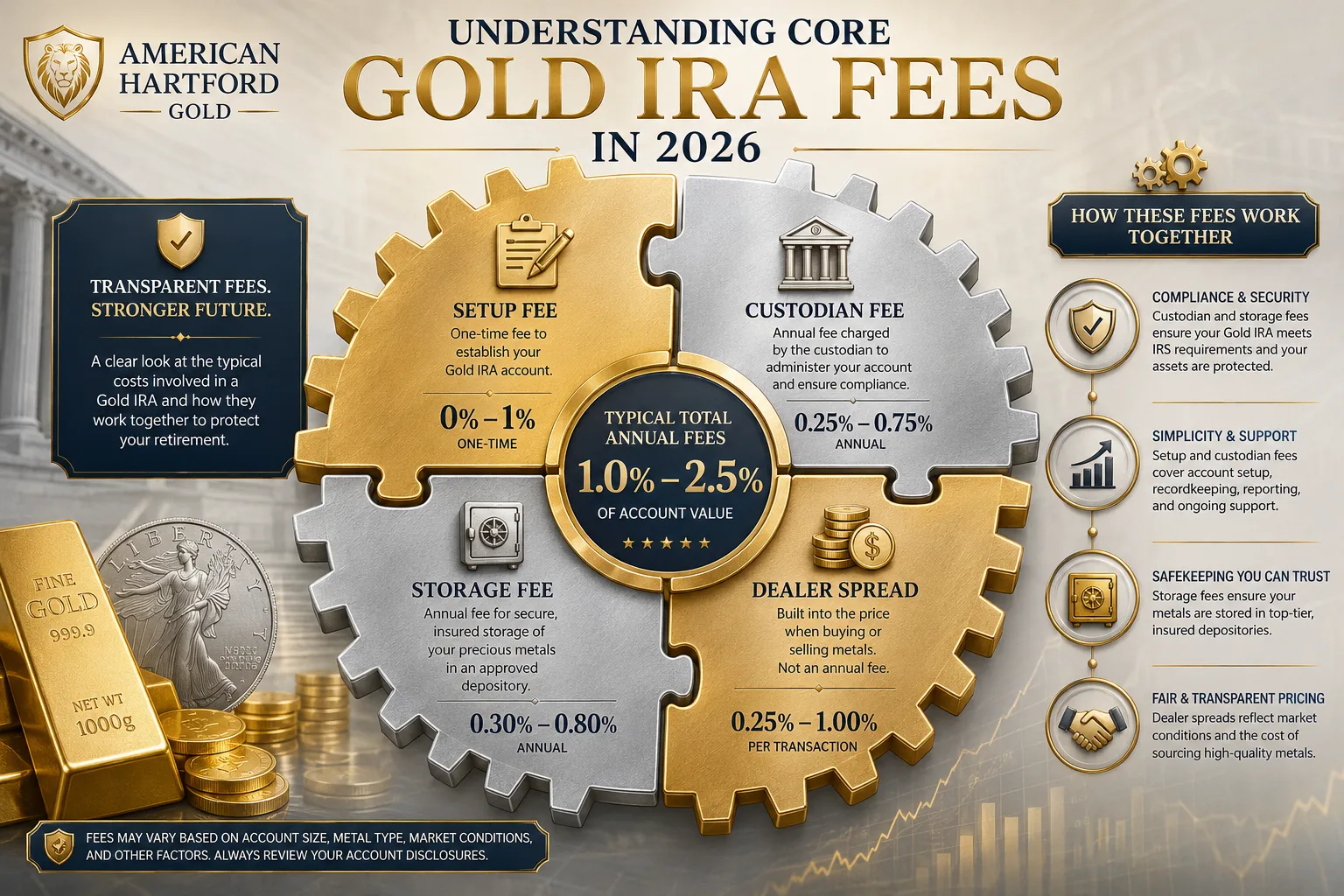
A trustworthy Gold IRA provider and precious metals dealer should provide fee schedules and costs in writing before any rollover, transfer, or purchase is completed. Common fee categories include IRA custodial fees, storage charges, transaction fees, and dealer markups over the spot price of gold or silver.
Regulatory and consumer-protection guidance emphasizes that investors should multiply the weight of metal by the current spot price and compare that figure with the quoted retail price, then ask how much the dealer would pay to buy back the same metal. If a company refuses to provide written fee details, charges significantly higher markups than typical industry ranges, or makes it hard to understand total costs, that pattern is a precious metals IRA scam warning sign. Fee-focused research can be supported with the American Hartford Gold fees breakdown, the Augusta Precious Metals fees review, and the Gold IRA Fees & Hidden Costs Guide.
4. Unclear dealer spread and markup
The "spread" or markup is the difference between what the dealer charges for metals and what the dealer would pay to buy them back. Some bullion dealers charge modest markups, while others may add significant premiums that are not immediately obvious to less experienced buyers.
Consumer-focused articles and regulators advise comparing dealer markups across several providers, checking whether commissions and spreads are clearly disclosed, and asking the dealer to explain how it earns profit on each transaction. Complaints about gold dealers often involve investors later discovering very high markups on coins or bars, especially when numismatic or collectible products were sold for IRA use. A Gold IRA offer that makes dealer profits difficult to identify or verify is a gold dealer red flag and a reason to pause funding. The guide to Gold IRA markups and spreads explains this cost in detail.
5. "Free silver" promotions that hide cost elsewhere
Gold IRA promotions that advertise "free silver," "bonus metals," or similar incentives can sometimes mask higher costs in other parts of the transaction. Consumer reporting shows that some companies offer free coins while charging higher markups on required purchases, leading to overall higher costs than more transparent competitors.
The CFTC's list of questions to ask before buying metals specifically advises investors to ask how the company earns its profit, especially when it appears to be giving away precious metals or offering large freebies. If a Gold IRA promotion focuses heavily on free silver, but fee schedules, spreads, and buyback terms are vague, that combination is a gold IRA fraud warning and requires detailed price comparison using the Gold IRA Fees & Hidden Costs Guide.
6. Collectible coin recommendations inside an IRA
IRS rules allow certain gold, silver, platinum, and palladium bullion products to be held in IRAs, but traditional collectible or numismatic coins are generally not permitted. Consumer and regulatory guidance warns that some Gold IRA operators steer investors toward graded or collectible coins, sometimes suggesting they are "special" or "rare," even when those coins are not appropriate for IRA use.
Collectible coins often carry higher markups than standard bullion, which can result in larger dealer profits and slower recovery of costs if metal prices do not move as expected. When a salesperson emphasizes collectible products for an IRA rather than clearly explaining bullion that qualifies under IRC §408(m) options, that behavior is a precious metals IRA scams risk factor and should trigger questions, independent verification, and possible consultation with tax professionals.
7. Confusing custodian and depository details
The IRS requires that Gold IRA metals be held by an approved custodian and stored at an insured, third-party depository rather than at home. Some marketing campaigns promote "home storage" IRAs or imply that investors can keep metals in personal safes while still receiving IRA tax treatment, which regulators warn can lead to taxes, penalties, and potential fraud.
The CFTC and FINRA recommend verifying that any IRA custodian is properly registered, that depositories are recognized and insured, and that investors understand exactly where metals will be stored and who is responsible for reporting holdings. Confusing or contradictory statements about custodians, storage locations, or insurance coverage are precious metals fraud warning signs that merit independent checks with state securities regulators, the IRS, or a structured tool like the Gold IRA Due Diligence Scorecard.
8. No written buyback policy
A clear buyback or liquidation policy is essential for any Gold IRA, because retirement planning depends not only on buying metals but also on the ability to sell or take distributions later. Regulators advise asking dealers how much they would pay to buy back metals, whether buybacks are guaranteed in writing, and what timeline and fees would apply.
Consumer complaints about precious metals often involve difficulty selling metals back, unexpected delays, or lower prices than investors expected when they tried to liquidate. If a Gold IRA company cannot provide a written buyback policy, or if policy language conflicts with what salespeople describe on the phone, that is a gold IRA company complaints risk factor and should be taken seriously. The Goldco legal-record analysis and the Birch Gold Group BBB analysis show how buyback practices and complaint history have been discussed in public records.
9. Poor complaint handling in public records
The Better Business Bureau (BBB), Consumer Financial Protection Bureau (CFPB), state attorneys general, and state securities regulators all maintain complaint databases or public records that can show patterns of customer issues. Regulators suggest checking both overall ratings and specific complaint narratives, paying particular attention to unresolved disputes, delivery problems, undisclosed fees, and difficulties in liquidating investments.
A Gold IRA provider with a large number of unresolved complaints, government actions, or repeated issues around pressure tactics and hidden fees presents clear gold IRA complaints and BBB complaints warning signs. Investors can also look up corporate filings through secretary of state databases to verify how long a company has been in business and whether claimed operating histories match official records.
10. Advice that sounds like tax or legal advice from a salesperson
The CFTC warns that precious metals dealers who market themselves as "IRA experts" are often not licensed or registered to provide investment, tax, or legal advice. When a salesperson suggests how much of a retirement portfolio should be allocated to metals, recommends taking distributions from a 401(k) or IRA, or interprets tax rules without proper credentials, that is a significant red flag.
Regulators advise that major decisions about rollovers, withdrawals, and allocation changes should be made with registered financial professionals, tax advisors, or attorneys rather than unregulated metal dealers. Customers should speak to a financial or tax advisor before making decisions related to retirement account rollovers, withdrawals, or portfolio allocation.
Score a company before you fund it
Turn these red flags into a checklist. The free Due Diligence Scorecard runs through 18 research signals, and the Dealer Comparison Worksheet lines up written quotes side by side.
Open the Due Diligence Scorecard →How to Verify a Gold IRA Company Before Funding
Verifying a Gold IRA provider involves checking both regulatory status and practical business details. Regulators and consumer-protection agencies recommend several basic steps before transferring funds.
- Confirm the IRA custodian is properly registered and experienced with self-directed IRAs and precious metals.
- Check the dealer's physical address, years in business, and any disciplinary history or enforcement actions at federal or state agencies.
- Review BBB ratings, complaint trends, and responses to consumer issues, focusing on patterns rather than single reviews.
The CFTC's "10 Things to Ask Before Buying Physical Gold, Silver, or Other Metals" bulletin stresses that investors should shop for reputable dealers, verify how long they have operated, and search for independent third-party reviews and complaints. The interactive Due Diligence Scorecard and Dealer Comparison Worksheet can help structure that verification alongside external checks with the SEC, FINRA, and state authorities.
What to Ask a Financial or Tax Advisor
Regulators repeatedly advise investors to consult qualified professionals before making significant changes to tax-advantaged retirement plans. A financial or tax advisor who is independent from the dealer can help evaluate whether a Gold IRA fits overall retirement goals.
Key questions to discuss include:
- How much exposure to precious metals is suitable given age, risk tolerance, and existing portfolio composition.
- Tax implications of moving funds from 401(k)s or traditional IRAs to self-directed IRAs that hold physical metals, including potential penalties or required minimum distributions.
- How Gold IRAs compare with other ways to invest in precious metals, such as exchange-traded products or mutual funds.
The CFTC explicitly cautions against taking cash from retirement plans under special rules to speculate in precious metals without first consulting financial, tax, or legal advisors. Customers should speak to a financial or tax advisor before making decisions about rollovers, withdrawals, or reallocations into precious metals IRAs.
Internal Research Checklist
A structured checklist can help investors evaluate Gold IRA opportunities more consistently and reduce the chance of overlooking key risk factors. The following table summarizes core questions aligned with regulatory and consumer-protection guidance.
| Checklist item | What to look for | Why it matters |
|---|---|---|
| Registration and licensing | SEC, FINRA, and state regulator records for custodians and any advisor-level sales staff. | Unlicensed professionals and unclear registrations are common red flags in investment fraud. |
| Complaint history | BBB, CFPB, state AG, and online consumer reviews for patterns of issues. | Repeated complaints about delivery, fees, or buybacks suggest structural problems, not isolated events. |
| Written fee schedule | Clear documentation of custodial fees, storage charges, and dealer markups. | Hidden or vague fees are a central theme in precious metals IRA scams. |
| Product eligibility | Confirmation that proposed coins and bars meet IRS rules for IRA use. | Collectible or numismatic coins inside IRAs can create compliance issues and higher markups. |
| Storage arrangements | Named, insured depository and clear explanation of storage costs and responsibilities. | Misleading storage claims, including "home storage" IRAs, can expose investors to penalties and fraud risk. |
| Buyback policy | Written terms for selling metals back, including timing and pricing method. | Difficulty liquidating positions is a common complaint in precious metals cases. |
The Due Diligence Scorecard and Gold IRA Quote Checklist can be used alongside this checklist to capture notes and compare several providers on the same criteria.
FAQ
Are all Gold IRA promotions that mention "free silver" scams?
Not all promotions that include free silver or bonus metals are fraudulent, but regulators advise that investors treat such offers with caution and focus on overall pricing rather than advertised gifts. Comparing spot prices, dealer markups, and written fee schedules across multiple providers is the best way to determine whether the promotion disguises higher costs elsewhere.
Can a Gold IRA hold coins at home?
IRS rules for precious metals IRAs generally require that metals be held by approved custodians and stored in recognized depositories, not in personal safes or home storage. CFTC guidance notes that pitches for home storage IRAs or "special" structures that allow keeping IRA metals at home are often misleading and can lead to taxes, penalties, or fraud concerns.
How can older investors reduce the risk of precious metals IRA scams?
Federal and Senate reports highlight that unscrupulous precious metals dealers often target older investors through telemarketing and unsolicited pitches. Avoiding cold calls, insisting on written documentation, checking complaint histories, and consulting independent advisors before moving retirement savings are core steps recommended by regulators to reduce risk.
Is a Gold IRA always suitable for retirement diversification?
Regulators do not describe Gold IRAs as universally suitable or unsuitable; they emphasize that suitability depends on an investor's goals, risk tolerance, and overall portfolio. Because metals can be volatile and do not produce income like bonds or dividend-paying stocks, any decision to allocate retirement funds to a Gold IRA should be reviewed with independent financial and tax advisors.
Sources
- Commodity Futures Trading Commission. 10 Things to Ask Before Buying Physical Gold, Silver, or Other Metals.
- Commodity Futures Trading Commission. Precious Metals Fraud.
- Commodity Futures Trading Commission. Customer Advisory: Precious Metals Fraud.
- Commodity Futures Trading Commission. Lies vs. Facts: The Truth Behind Gold and Silver IRA Scams.
- FINRA. 10 Things to Ask Before Buying Physical Gold, Silver or Other Metals.
- Federal Trade Commission. FTC Action Against a Bogus Precious-Metals Scheme.
- Investor.gov (SEC). Red Flags of Investment Fraud Checklist.
Article reviewed and edited by Daniel — independent precious-metals retirement researcher.