Affiliate disclosure: The publisher may receive compensation from precious-metals companies, including companies discussed in this article. That compensation does not change what court, regulator, BBB or company records show, and it does not alter the research method used here.
The most defensible way to research a precious-metals company is to start with the exact legal entity, then separate court allegations, regulator actions, BBB complaint data, and the company’s own statements. For Preserve Gold, the permitted public sources establish a California-linked corporation called Preserve Gold Group, Inc., a current BBB profile, and a state attorney-general registration record. The open court and regulator searches described below did not produce a matching federal civil docket or a matching enforcement matter under that exact legal name. That is a search result with defined limits, not a lifetime legal conclusion.
The durable value of the exercise is the method. The same sequence can be applied to another precious-metals dealer without relying on review sites, marketing summaries, or reputation scores.
What is the exact legal entity behind Preserve Gold?
Preserve Gold’s own privacy policy identifies the legal entity as Preserve Gold Group, Inc. and defines “Preserve Gold” as a shortened company name. The policy is dated June 3, 2024. The company’s terms, also dated June 3, 2024, use the same corporate name and list a Woodland Hills, California contact address. These are company statements, not an independent corporate-status certificate.
Company sources reviewed as company statements: Preserve Gold, Privacy Policy, page dated June 3, 2024; Preserve Gold, Terms & Conditions, page dated June 3, 2024; both observed August 13, 2026.
BBB independently lists Preserve Gold as a corporation, gives July 6, 2022 as both the business-start and incorporation date, and reports California Secretary of State license number 5147000. BBB also lists the current profile address as 21700 Oxnard Street, Suite 430, Woodland Hills, California. BBB business profile.
For practical search purposes, the available permitted records support California as the relevant corporate-registration jurisdiction. The current California Secretary of State entity-detail record did not render through the research interface used for this article, however. The article therefore does not substitute a search-engine summary for the state’s live corporate file. The BBB license field and the company’s own legal-name disclosure establish the search identity; the California Secretary of State business-search system remains the appropriate place to confirm live corporate status directly.
The exact-name step matters because a brand search for “Preserve Gold” can return unrelated uses of two ordinary English words. Court and regulator databases should therefore be searched first for “Preserve Gold Group, Inc.”, then for documented former names, trade names, officers, addresses, and license numbers when those identifiers are relevant.
A result belonging to a similarly named company should not be attributed to Preserve Gold Group, Inc. unless the legal identifiers match.
What litigation matters were located in court records?
The court-record search used the exact legal name Preserve Gold Group, Inc. in CourtListener’s RECAP collection and open indexes of federal and California court material.
No matching federal civil docket was returned in those open searches on August 13, 2026.
That finding requires a substantial qualification.
CourtListener describes RECAP as the largest open collection of PACER data and says it contains hundreds of millions of docket entries and nearly every federal case. CourtListener also explains that its coverage can have gaps because PACER material enters the archive through several collection methods and some court feeds are incomplete. CourtListener coverage information.
PACER is the official federal court system. Its Case Locator is a nationwide index of federal district, bankruptcy, and appellate cases, updated daily. A party-name search can return the court, case number, filing date, and closing date, with access to the underlying court record. PACER requires registration, and name searches can incur access charges. PACER Case Locator.
A national PACER result was not purchased and authenticated during this research session. That prevents a categorical statement about the company’s complete federal litigation history.
California state-court research has a similar limitation. Preserve Gold’s published address is in Los Angeles County. The Los Angeles Superior Court provides an official name-index search covering civil, small-claims, family, and probate matters. The court says the index is updated daily, but party-name searches carry a public-access fee. Los Angeles Superior Court Civil Index.
A paid Los Angeles name-index report was not obtained during this session.
Accordingly, there is no court case caption, case number, filing date, or adjudicated outcome that this article can responsibly list from the permitted court records reviewed.
That does not establish that no matter has ever existed. It establishes only that the open searches performed did not supply a court record suitable for publication and that the official paid indexes were not fully exhausted.
Any article elsewhere that attributes a case to the company should therefore be checked against the docket itself before the claim is repeated.
What regulator records were found under the exact legal name?
The regulator search used Preserve Gold Group, Inc. as the primary query and the company brand as a secondary query.
Exact-name searches of official SEC, CFTC, FTC, FINRA, California Department of Financial Protection and Innovation, and California Attorney General materials did not return a matching enforcement matter in the searches performed on August 13, 2026.
That sentence is deliberately narrower than a statement about the company’s entire regulatory history. Each database has a defined scope. Search systems change, and some matters may be filed under individuals, affiliates, former names, or different legal entities.
The official databases searched or reviewed included:
- the SEC’s litigation-release collection, which publishes civil actions brought by the SEC in federal court: SEC Litigation Releases;
- the FTC Legal Library’s Cases and Proceedings collection, which can be searched by company name, individual name, or case number: FTC Cases and Proceedings;
- FINRA BrokerCheck and FINRA Disciplinary Actions Online, which cover registered brokerage firms, registered persons, and published FINRA disciplinary material: FINRA BrokerCheck information;
- CFTC enforcement and registration resources: CFTC background check; and
- California DFPI’s Actions and Orders database, which publishes civil, administrative, and other actions under the department’s jurisdiction from 2002 forward: California DFPI Actions and Orders.
The gold IRA enforcement tracker can help organize agency records across the precious-metals sector, but the cited agency order, complaint, judgment, or release should remain the controlling source.
What state attorney-general record was located?
One affirmative government record did appear.
The Ohio Attorney General’s Telephone Solicitors page lists Preserve Gold Group, Inc. as a California company registered under Ohio’s Telephone Solicitation Sales Act. The listing describes its line of business as “Precious Metals and IRAs” and shows a registration expiration date of May 6, 2027. Ohio Attorney General Telephone Solicitors registry.
The Attorney General expressly states that granting registration is not an explicit or implicit endorsement of the registered business’s products or services.
That is a registration record, not a disciplinary order and not a finding concerning sales conduct.
Its value is chiefly identity confirmation: the exact corporate name appears in a government database alongside the stated business line.
Why can an empty regulator search be misleading?
Regulator databases answer different questions.
FINRA BrokerCheck, for example, is designed around registered securities firms and persons. FINRA explains that BrokerCheck does not contain every kind of civil litigation and that some disclosed matters can consist of pending allegations rather than proven events. FINRA BrokerCheck information.
A physical-metals dealer can therefore be absent from BrokerCheck without that absence answering broader questions about court cases, state registrations, or consumer-protection matters.
The same principle applies across agencies.
An SEC search tests SEC records. An FTC search tests FTC materials. A state securities search tests that regulator’s jurisdiction and published records. A negative search should not be expanded into a claim that no legal issue exists anywhere.
What does the BBB record show?
The Preserve Gold BBB profile observed August 13, 2026 displays an A+ rating and states that the business is BBB accredited.
BBB lists:
- accreditation beginning September 5, 2022;
- the BBB file opening on August 9, 2022;
- business operations beginning July 6, 2022;
- incorporation on July 6, 2022; and
- entity type as a corporation.
Source: Preserve Gold BBB Business Profile.
The complaint page observed in August 2026 showed 2 complaints in the preceding three years and 0 complaints closed in the preceding 12 months. Both are rolling windows and change as cases enter and age out, so the current totals should be read from BBB directly. One is categorized by BBB as a delivery issue and one as a sales-and-advertising issue. The status filters show one “Resolved” matter and one “Answered” matter. Preserve Gold BBB Complaints.
BBB defines “Resolved” to mean that the complainant verified satisfaction with the resolution.
“Answered” means the business addressed the complaint, but the customer either did not accept the response or did not report satisfaction to BBB. BBB complaint process.
Those complaint categories are not judicial findings. They are BBB’s classifications of marketplace complaints.
What does an A+ rating measure?
BBB states that its grade represents BBB’s opinion of how a business is likely to interact with customers. The rating uses information BBB can obtain, including complaint information, information supplied by the business, and public data. BBB Overview of Ratings.
BBB also states that its ratings are not a guarantee of reliability or performance and that customer-review stars are not part of the letter-grade calculation.
BBB instructs users to consider business size and transaction volume when interpreting complaint numbers. It says the nature of complaints and the business’s responses can be more important than the raw count.
Accreditation is separate.
BBB says accredited businesses must satisfy its Standards for Trust and pay an accreditation fee based on factors including company size. Those standards cover matters such as honest advertising, transparency, honoring promises, responsiveness, privacy, licensing, and government actions. BBB Accreditation Standards.
A BBB grade therefore does not measure metal pricing, dealer spreads, the suitability of a particular product, the tax treatment of an IRA transaction, or whether a particular company is appropriate for an individual retirement saver.
The provider transparency scorecard addresses a different question: what a provider publishes about its legal entity, costs, custody arrangements, and transaction terms.
What does Preserve Gold itself publish in response?
The company pages reviewed did not contain a statement responding to a named federal or state lawsuit or to a named SEC, CFTC, FTC, FINRA, DFPI, or state-attorney-general enforcement case.
Instead, Preserve Gold publishes general contractual and risk language.
Its Terms & Conditions page, dated June 3, 2024, states that placing an order binds the customer to the company’s shipping and customer agreement. It says the company makes reasonable efforts to ship metals within five to fourteen business days after confirmed good funds and provides a contact channel for product inquiries and complaints.
Its Risk Disclosures page, dated September 6, 2022, states:
“There is no assurance that commodities, i.e. precious metals, will achieve their objectives.”
The company also states that it acts as a seller and purchaser of precious metals, that no fiduciary relationship exists between Preserve Gold and the customer, and that metal values can rise, fall, or remain unchanged.
Company sources reviewed as company statements: Preserve Gold, Terms & Conditions, page dated June 3, 2024; Preserve Gold, Risk Disclosures, page dated September 6, 2022; observed August 13, 2026.
Those statements should not be treated as independent verification of legal status or performance.
Their relevance is narrower: they show what the company itself says about its role, risks, delivery process, and contractual relationship with customers.
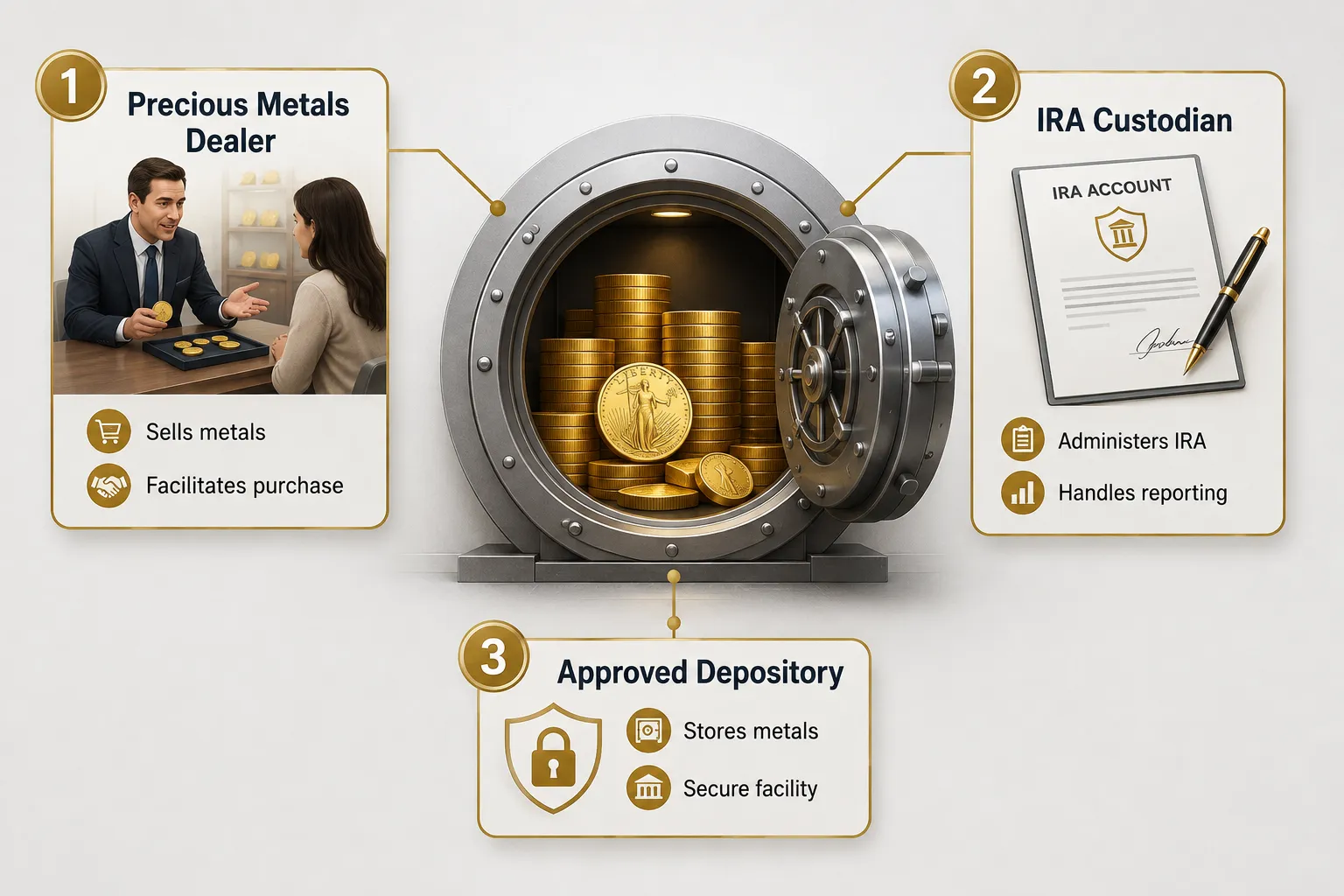
Where a retirement account is involved, legal-record research should also remain separate from trustee and storage verification. The trustee and storage verification guide explains how to confirm the IRA fiduciary and storage chain independently of the dealer.
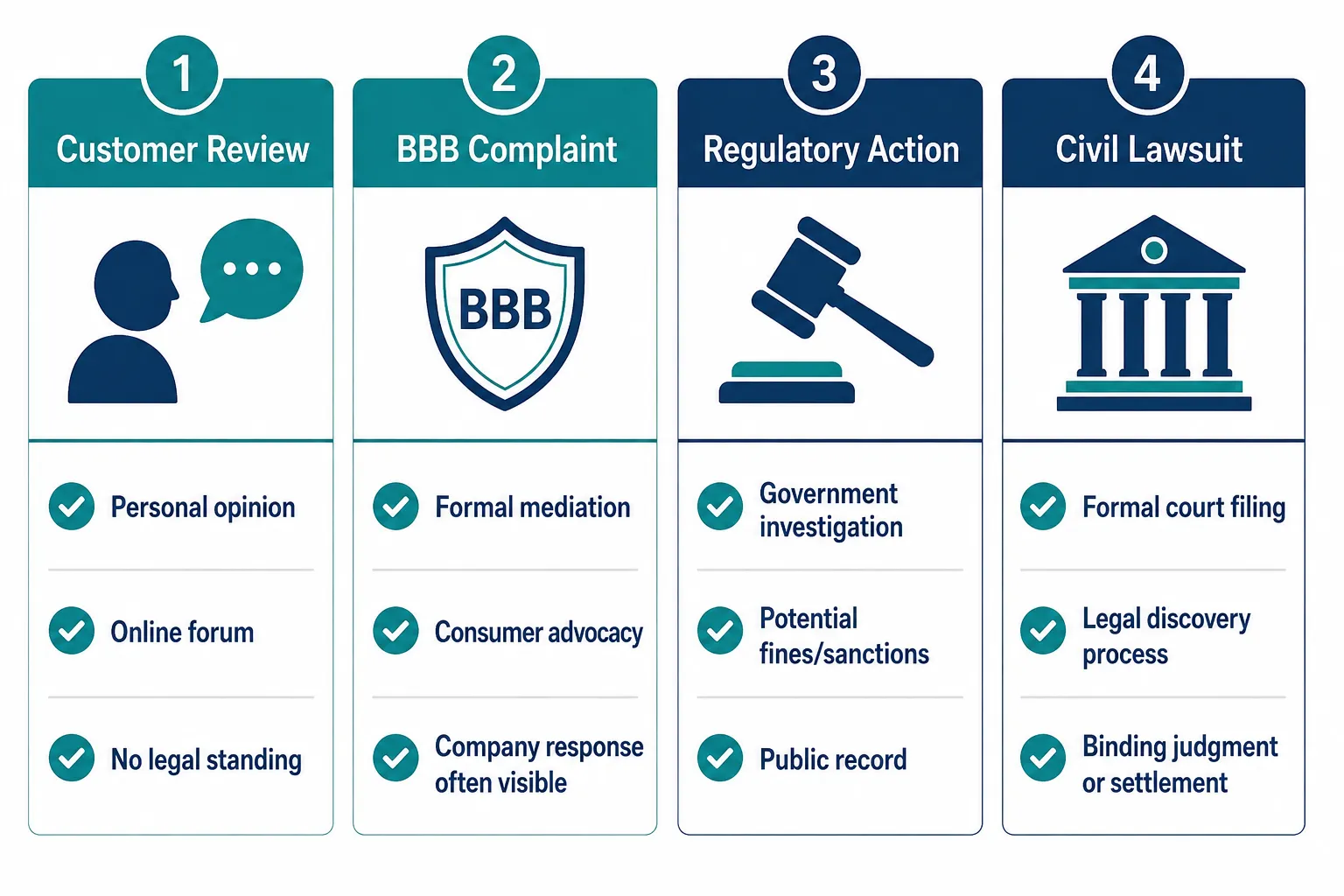
The same method applied to a company with an extensive public record produces a very different page. The Lear Capital public record documents a state attorney general action, a multi-state regulatory resolution and a Chapter 11 filing — a useful contrast, because it shows what the search below looks like when it returns results rather than silence.
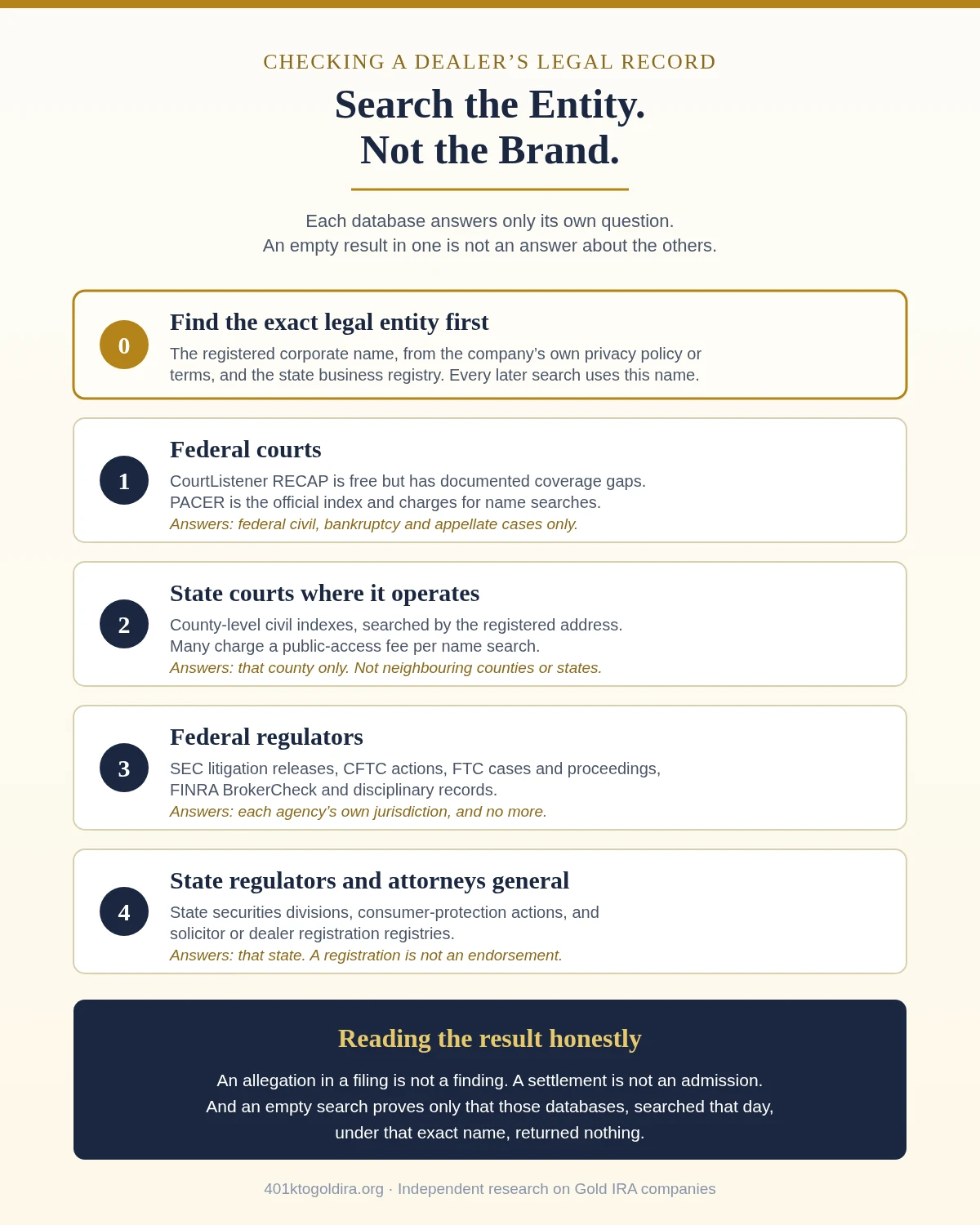
How can any retirement saver search a precious-metals company’s legal record?
The method below works even when the company under review is completely different.
Step 1: Establish the legal identity before searching
The starting documents should be the company’s terms, privacy policy, purchase agreement, invoice, wire instructions, and state corporate record.
The research file should capture:
- exact legal name;
- corporate suffix;
- state of organization;
- entity or registration number;
- documented trade names;
- current and former addresses;
- named officers where officially published; and
- former legal names, if any.
Searches should begin with the exact legal name in quotation marks. Brand-name searches come second.
A similarly named result should be matched against address, entity number, officers, and dates before it is attributed to the company under review.
Step 2: Search federal court records in two layers
CourtListener/RECAP is a useful open first pass. A search can reveal docket metadata, parties, filings, and documents that have entered the RECAP archive.
Its coverage is extensive but not perfectly complete. CourtListener coverage information.
PACER is the official second layer.
If the court is unknown, the PACER Case Locator provides the nationwide index. If a case number is known, the specific court docket should be opened and the complaint, answer, dispositive orders, settlement documents, and judgment should be read. PACER Case Locator.
The docket line alone is rarely enough.
Step 3: Search state courts in the states that matter
State-court systems are fragmented.
The company’s state of organization, headquarters state, major sales states, and states named in known disputes can each matter.
Some courts provide free name searches. Others charge access fees.
Los Angeles Superior Court, for example, provides a daily-updated party-name index but charges for name searches. Los Angeles Superior Court Civil Index.
The research log should record the portal used, exact query, search date, and any access limitation.
Step 4: Read allegations and findings as different things
A complaint states allegations. It shows what a plaintiff or agency claims and what relief is requested. Filing a complaint does not establish that the allegations are true.
An answer records the defendant’s formal responses and defenses.
A motion can ask a court to dismiss, compel, exclude, or decide an issue. A motion is not the same as an order granting that request.
An order shows what the court actually ruled at that stage.
A judgment records the court’s disposition when judgment is entered.
A consent order or settlement must be read on its own terms.
Many regulatory settlements can resolve a matter without an admission of liability. FINRA permits a respondent to submit an uncontested settlement offer without admitting or denying liability. FINRA hearing process.
The CFTC also states that its current policy preserves discretion to settle with defendants who decline to admit facts or liability, while retaining discretion to seek admissions in a particular matter. CFTC enforcement policy release.
Accordingly, the accurate description of a settlement comes from the actual order.
A settlement should not automatically be rewritten as an admission, and it should not automatically be rewritten as exoneration.
Step 5: Search regulator databases by exact name and related identifiers
The same legal name should be searched in the SEC, CFTC, FTC, FINRA, the home-state securities regulator, and relevant state attorney-general records.
A reproducible search log can use this structure:
| Database | What it can reveal | What an empty result cannot establish |
|---|---|---|
| SEC litigation releases and related SEC records | SEC civil actions and published agency matters | Absence of court, FTC, CFTC, FINRA, or state matters |
| FTC Cases and Proceedings | FTC federal and administrative matters | Absence of matters outside FTC jurisdiction |
| FINRA BrokerCheck and disciplinary records | Registered firms and persons, disclosures, disciplinary material | Complete civil-litigation or physical-metal dealer history |
| CFTC records | Commodity-related registrations and enforcement materials | Complete state or securities history |
| State securities regulator | State orders, licenses, actions, and alerts | Complete federal or other-state history |
| State attorney general | Consumer-protection releases, registrations, settlements, and actions | Complete court or specialist-regulator history |
A search that finds nothing is a dated database result. It is not a certificate of legal cleanliness.
Step 6: Save the actual record, not just the search result
For a court matter, the research file should preserve the complaint, docket sheet, key orders, settlement agreement, consent order, and judgment where available.
For an agency matter, it should preserve the agency complaint or order, release number, matter number, respondent name, filing date, status, and any later modification or termination.
For BBB, it should preserve the profile date observed, rating, accreditation status, complaint count, categories, and closure statuses.
That approach makes the research reproducible after web pages change.
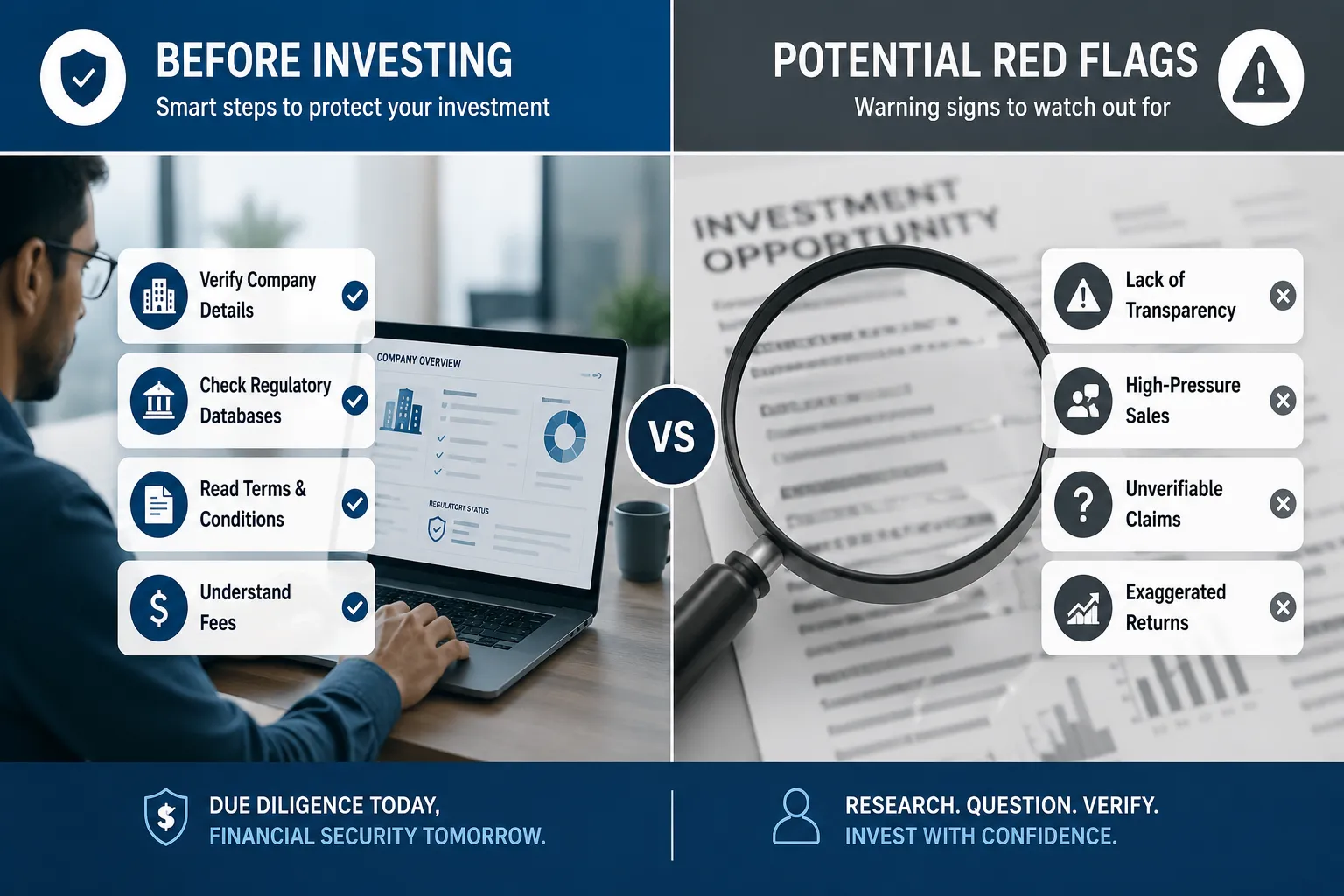
Step 7: Keep legal-record research separate from price and custody research
A court search says little about whether a quoted metal price is competitive.
A BBB grade says little about the dealer’s spread.
A regulator database says little about annual custodian and storage charges unless those costs are part of a specific proceeding.
A separate written cost file should therefore capture dealer pricing, custodian charges, and depository charges. The gold IRA fee benchmark provides a structure for that comparison.
What could not be verified from the permitted public sources?
Several limits materially affect the conclusions.
A complete nationwide federal docket search
A complete nationwide result was not independently authenticated through a paid PACER session.
CourtListener/RECAP was searched, but CourtListener itself acknowledges coverage gaps. The article therefore cannot make a categorical lifetime statement about federal litigation.
A paid Los Angeles Superior Court party-name report
The official portal confirms that the service exists and that name searches require a fee.
Open searches did not supply a Preserve Gold Group, Inc. case suitable for reporting, but that is not equivalent to exhausting the paid state index.
A direct California Secretary of State entity-detail page
The company’s own policy gives the legal name, while BBB reports a California Secretary of State license number and corporate status.
The live state record should still be checked directly before relying on corporate status for a new transaction.
Matters filed under related names or people
Exact-name regulator searches are not proof that a matter can never exist under a related person or entity.
SEC, CFTC, FTC, FINRA, DFPI, and California Attorney General searches did not return a matching Preserve Gold Group, Inc. enforcement matter in this research session.
A later search, a former name, an officer name, or a related entity could produce different results.
A company response to a named proceeding
The company pages reviewed did not publish a response to a named court or regulator proceeding.
The pages instead contain general terms, risk disclosures, and customer-contract statements.
These limits are part of the result. A legal-record reference is more reliable when it distinguishes what was located, what was searched, and what remained inaccessible.
What does the public record support overall?
The public record reviewed supports several specific statements.
Preserve Gold Group, Inc. is the legal corporate name used in the company’s own privacy and terms pages.
BBB lists Preserve Gold as a corporation with a business and incorporation date of July 6, 2022, an A+ rating, BBB accreditation beginning September 5, 2022, and two complaints in its three-year reporting window as observed August 13, 2026. Preserve Gold BBB Business Profile.
The Ohio Attorney General separately lists Preserve Gold Group, Inc. as a registered telephone solicitor in the “Precious Metals and IRAs” line of business, while expressly stating that registration is not an endorsement. Ohio Attorney General Telephone Solicitors registry.
The exact-name regulator searches described above did not return a matching enforcement matter in the federal and California databases searched on August 13, 2026.
The open court search likewise did not produce a matching federal or California civil docket suitable for reporting.
Because official paid indexes were not fully exhausted, those findings should remain search-date statements rather than broad conclusions about the company’s entire history.
For another precious-metals company, the same method remains valid: identify the legal entity, search official court and agency systems, read the underlying documents, distinguish allegations from findings, record access limits, and treat each search result according to the scope of the database that produced it.
Consolidated source list
Court-record systems
- PACER and PACER Case Locator
- CourtListener/RECAP coverage information
- Los Angeles Superior Court Civil Index
Regulator and attorney-general records
- SEC Litigation Releases
- FTC Cases and Proceedings
- FINRA BrokerCheck information
- CFTC registration and background check
- California DFPI Actions and Orders
- California Attorney General news and releases
- Ohio Attorney General Telephone Solicitors registry
BBB records
- Preserve Gold BBB Business Profile
- Preserve Gold BBB Complaints
- BBB Overview of Ratings
- BBB Accreditation Standards
- BBB complaint process
Preserve Gold company statements
- Preserve Gold, Privacy Policy — page dated June 3, 2024; observed August 13, 2026.
- Preserve Gold, Terms & Conditions — page dated June 3, 2024; observed August 13, 2026.
- Preserve Gold, Risk Disclosures — page dated September 6, 2022; observed August 13, 2026.
This article is for general educational research only. It is not legal, financial or tax advice. It reports what public records were found on the dates searched and does not assert that any allegation is true or that any company has engaged in wrongdoing. Court and regulator records change; readers should check current databases directly. Purchasing precious metals involves risk, and past performance does not guarantee future results. Readers should consult a qualified legal or tax professional before acting.
Article reviewed and edited by Daniel — independent precious-metals retirement researcher.