
Affiliate disclosure: Some links on this page may be sponsor links. The site owners may be compensated if customers request information from companies mentioned here. This page is educational only and does not provide financial, tax, or legal advice. Customers should speak with a financial or tax advisor before making retirement-account decisions. Past performance does not guarantee future results.
Quick Answer: Timing Matters, but Allocation Discipline Matters Too
Waiting for a perfect gold entry point can feel sensible, but short-term gold price moves are hard to forecast. A measured Gold IRA timing decision usually starts with a target allocation, retirement time horizon, liquidity needs, and advisor review rather than a single price prediction.
For some retirement savers, staged purchases or dollar-cost averaging can reduce the pressure of making one large purchase on one date. For others, a lump-sum purchase may align the portfolio with its intended allocation faster. Neither approach guarantees a better outcome.
Why Gold Prices Move
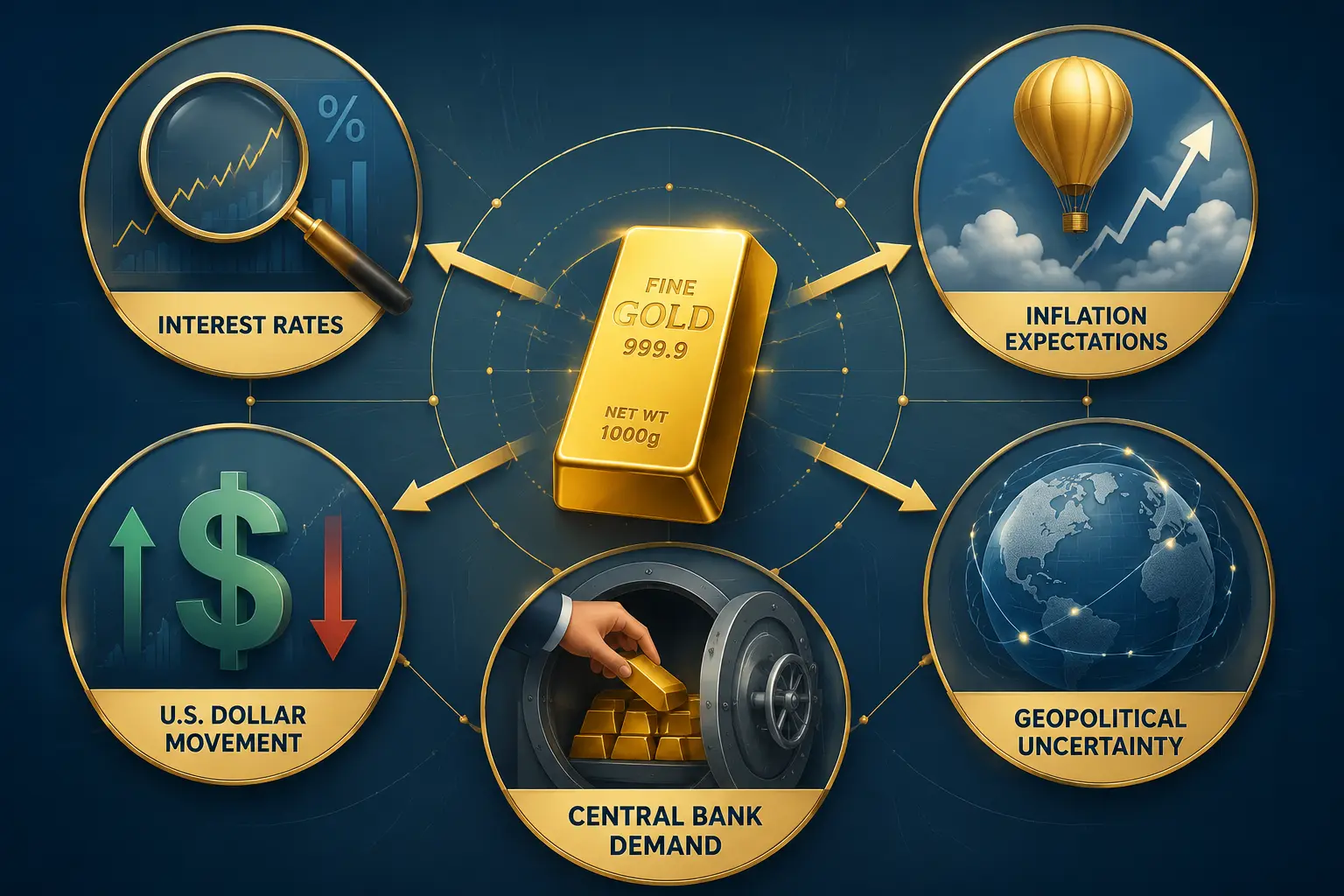
Gold prices respond to a mix of macroeconomic, financial, and behavioral forces. These can include real interest rates, inflation expectations, U.S. dollar movement, geopolitical uncertainty, central bank demand, investment flows, and broader market stress.
Because several drivers can move at once, gold prices can rally or fall for reasons that are difficult to predict in advance. That makes market timing risky, especially when retirement assets and rollover decisions are involved.
Why Waiting for a Dip Can Be Difficult
Many investors consider waiting for a dip before opening or funding a Gold IRA. The challenge is that dips are only obvious after the fact. A small pullback can become a deeper decline, or a hoped-for dip may never arrive before prices move higher.
Waiting can also create behavioral pressure. A retirement saver who delays too long may eventually buy after a sharp move simply because the decision becomes emotionally uncomfortable. The goal is not to ignore price, but to avoid letting price anxiety replace an allocation plan.
Customers should speak with a financial advisor before making decisions about timing, allocation, or staged purchases.

Lump Sum vs Staged Purchases
A lump-sum purchase immediately puts the intended gold allocation to work, but it concentrates entry-price risk on a single day. A staged purchase plan spreads that entry risk across several dates, but it also delays full exposure to the target allocation.
In a Gold IRA, staged purchases may be used after a rollover lands as cash, or when an investor wants to build a position gradually. Fees, dealer spreads, and minimum purchase requirements should be reviewed before many small transactions are planned.
Dollar-Cost Averaging and Precious Metals
Dollar-cost averaging means investing a set amount at regular intervals regardless of price. For precious metals, this can reduce the emotional burden of choosing one purchase date and can create a written process for building an allocation.
DCA is not a guarantee of better returns. It is mainly a discipline and risk-management method. In a Gold IRA, customers should also consider account fees, custodian rules, dealer spreads, storage, and whether regular purchases fit the provider’s processes.
How Retirement Time Horizon Affects Timing Decisions
Time horizon matters. A younger retirement saver may have more time to tolerate gold volatility and build a position gradually. A current retiree may need more focus on liquidity, income needs, RMDs, and sequence-of-returns risk.
Gold does not pay dividends or interest, so retirement income planning cannot rely on gold the same way it might rely on cash, bonds, pensions, or income-producing assets. The 4 Percent Rule and Gold IRAs guide explains how physical metals can affect withdrawal planning.
Long-Term Allocation Versus Market Timing
For many retirement savers, the better question is not whether gold will be cheaper next month. It is what allocation, if any, fits the overall retirement plan. Common planning discussions treat gold as a modest diversifying sleeve rather than a primary income source.
Overconcentration can create problems if gold falls, if liquidity is needed, or if a large position must be sold to satisfy withdrawals. The Gold IRA Calculator can help frame allocation scenarios, while the Best Gold IRA Companies page can support provider comparison.
Gold IRA Educational Video
The approved educational video can help explain the broader Gold IRA concept before comparing timing and allocation questions.
Video published by Goldco on YouTube — a company this site has an affiliate relationship with. Embedded as a third-party explanation; not produced, endorsed or independently verified by this site.
When Waiting or Starting Small May Make Sense
Waiting or staging may make sense when a planned purchase is large relative to the portfolio, when near-term cash needs are unclear, or when the investor wants to coordinate purchases with a scheduled rebalancing process. Starting with a smaller allocation can also reduce the risk of making an oversized purchase during a volatile period.
Those decisions should be tied to a written plan: target allocation, maximum allocation, time horizon, liquidity needs, RMD expectations, and review dates. Past performance does not guarantee future results.
Questions for a Financial Advisor
- What percentage of the retirement portfolio, if any, should be allocated to gold or other precious metals?
- Should a purchase be made at once or staged over time?
- How do dealer spreads and storage fees affect a staged purchase plan?
- How do RMDs and distribution mechanics affect Gold IRA timing decisions?
- How does gold interact with stocks, bonds, cash, and income needs in the broader plan?
Customers should speak with a financial or tax advisor before making allocation, rollover, tax, or distribution decisions.
FAQ
Should investors wait for a gold price dip before starting a Gold IRA?
There is no reliable way to know whether a better price will appear soon. Many retirement savers use staged purchases or allocation targets instead of trying to predict a perfect entry point.
Is dollar-cost averaging into gold a good strategy?
Dollar-cost averaging can spread timing risk and reduce emotional pressure, but it does not guarantee better returns than a lump-sum purchase.
How volatile are gold prices?
Gold prices can move sharply based on rates, inflation expectations, currency movement, central bank demand, and geopolitical uncertainty. Past performance does not guarantee future results.
How does gold fit into a retirement portfolio for withdrawals?
Gold is usually treated as a diversifier rather than a primary income source because physical metals do not pay interest or dividends.
Do Gold IRAs make timing issues more complex?
Yes. Gold IRAs add storage, dealer spreads, custodian procedures, RMD rules, and distribution mechanics.
What tools can help frame gold timing and allocation?
Educational tools such as the Gold IRA Calculator and the matching quiz can help frame allocation discussions, but they do not replace personalized professional advice.
Further Reading
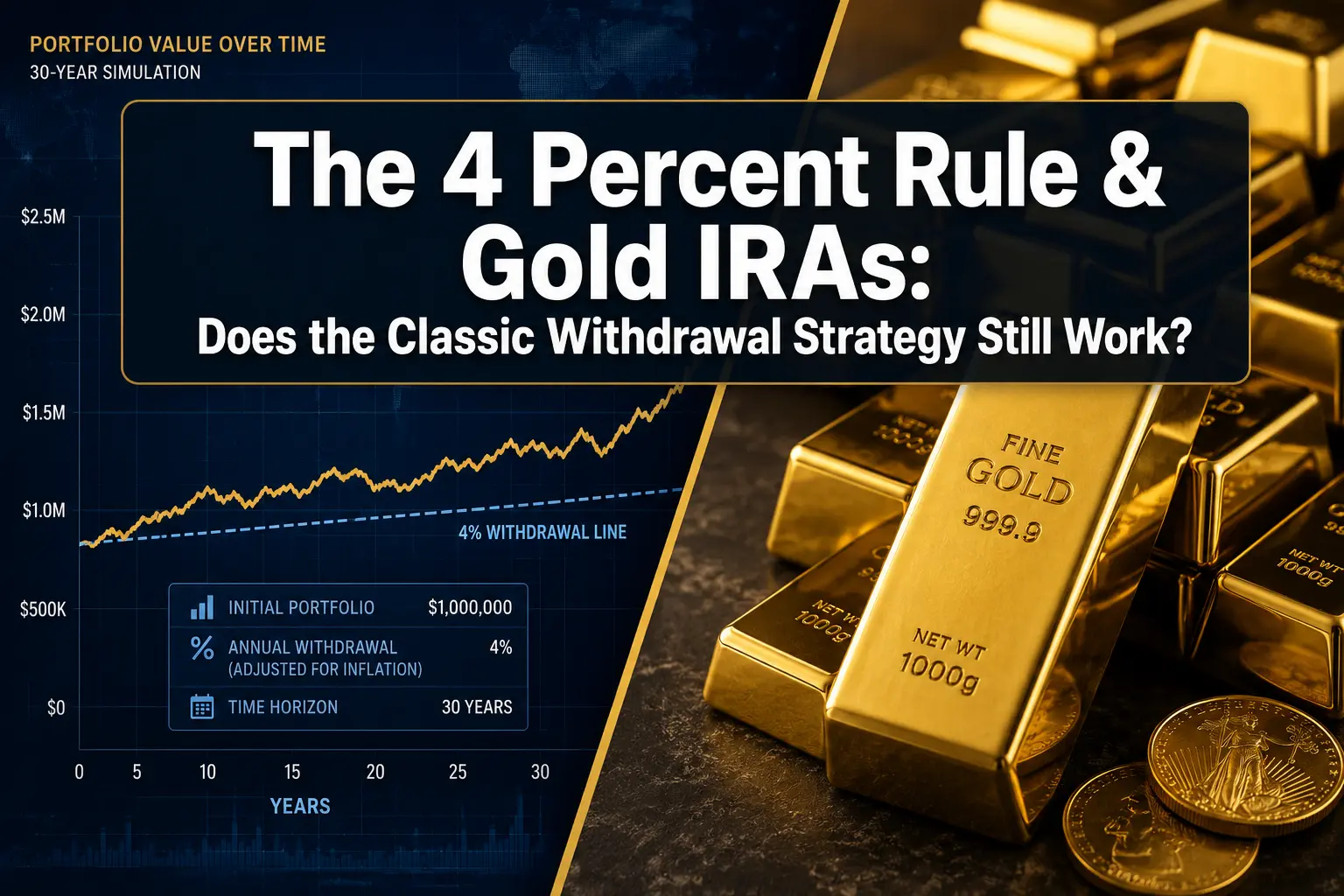 The 4 Percent Rule and Gold IRAsSee how physical metals can affect withdrawal planning and retirement income assumptions.
 Are Gold Bars a Good Investment?Review physical gold considerations before comparing retirement account options.
 Gold IRA Exit StrategiesPlan liquidity, transfers, in-kind distributions, and beneficiary paths before funding.