Affiliate disclosure: Some of the links in this article are from sponsors. The site owners may be paid to recommend the companies covered. Reviews may not be neutral or independent — readers should treat this site as a research starting point, not personalised financial advice. Read the full disclosure.
Quick Answer
Gold bars may be a useful physical-gold investment for buyers who want direct bullion exposure, lower premiums per ounce, and a long holding period. They are not automatically better than gold coins, Gold ETFs, or a Gold IRA. The right choice depends on capital size, storage plan, tax structure, liquidity needs, and whether the goal is personal possession or retirement-account exposure.
Gold has seen strong price moves into 2025 and 2026, which has renewed interest in bars, coins, ETFs, and Gold IRAs. Future gold prices remain uncertain, and bank forecasts are only scenarios, not guarantees. Past performance does not guarantee future results.
Gold Bars at a Glance: Pros and Cons Snapshot
A quick snapshot helps retirement savers see where gold bars tend to shine and where they may fall short compared with coins, ETFs, and Gold IRAs.
| Aspect | Pros of Gold Bars | Cons of Gold Bars |
|---|---|---|
| Cost per ounce | Usually lower premiums than most coins for the same weight. | Small bars often carry high premiums per gram. |
| Ownership | Direct ownership of physical bullion with no fund or issuer in between. | Personal responsibility for storage, security, and insurance. |
| Liquidity | Recognised brands and common sizes are widely tradable. | Large bars can be harder to sell quickly at full value. |
| Divisibility | Larger bars hold substantial value in compact form. | Harder to sell small portions compared with coins or ETFs. |
| Taxes | Simple taxable treatment as a collectible in a regular account. | Long-term gains may be taxed at up to a 28% collectibles rate. |
| IRA use | Certain bars are eligible inside a Gold IRA when IRS rules are met. | Bars must meet strict purity/refiner standards and be held through the IRA's trustee or custodian. |
| Income | Potential price appreciation over time. | No dividends or interest; returns rely only on price changes. |
Gold bars are one format within a broader precious-metals toolkit that also includes coins, gold-backed ETFs, and Gold IRAs, as outlined in the Best Gold IRA Companies 2026 comparison.
What Counts as a Gold Bar Investment?
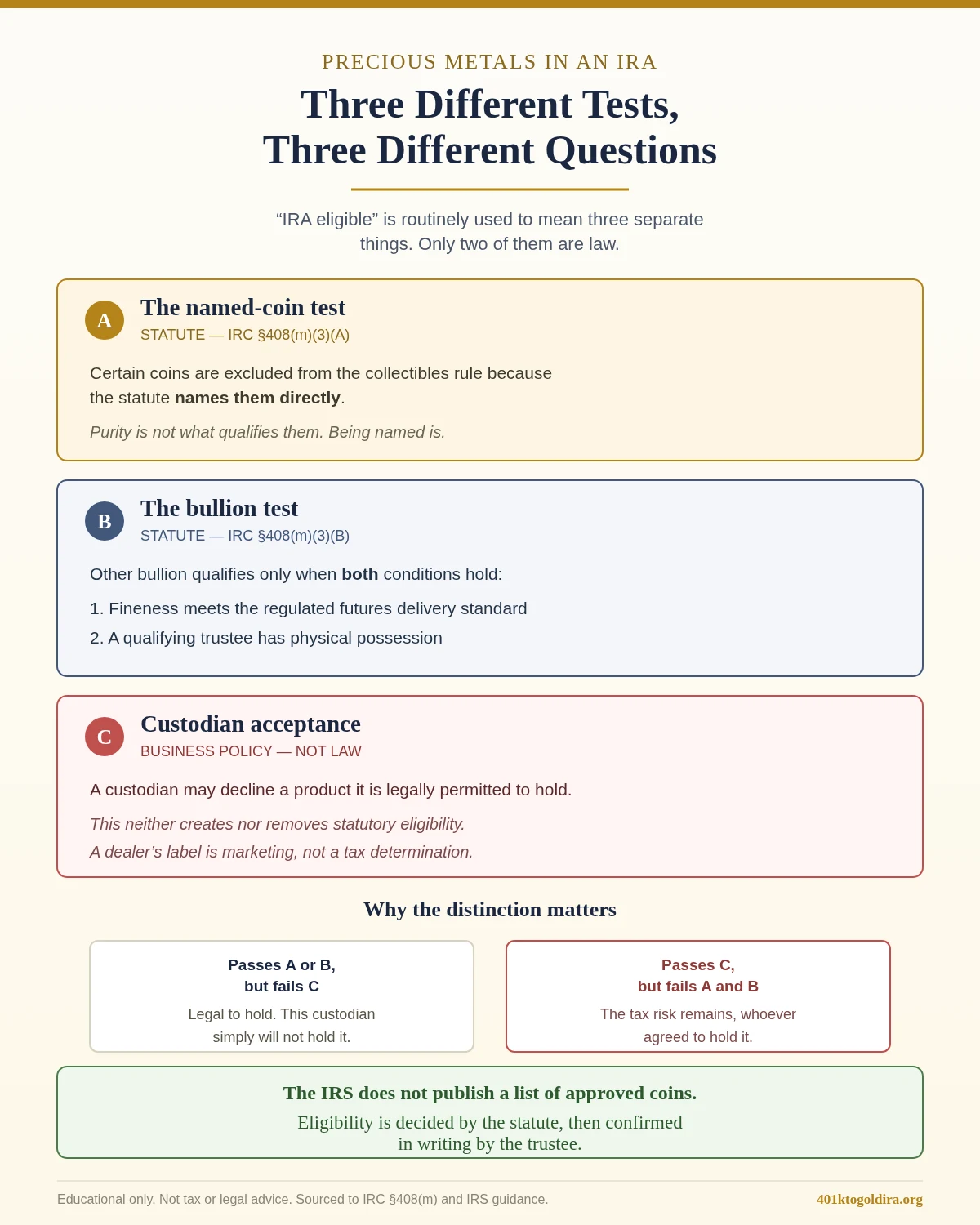
In this article, “gold bars” refers to investment-grade bullion bars made to high purity standards, not jewellery or collectible art pieces. Most investment bars are at least 99.5% pure gold, matching the same fineness thresholds required for IRA-eligible bullion.
Common investment bars include 1 oz, 10 oz, 100 gram, and 1 kilogram bars produced by major refiners such as PAMP, Perth Mint, Royal Canadian Mint, and other recognised brands. Many modern bars come sealed in a tamper-evident assay card that lists weight, purity, refiner, and a unique serial number, which makes later verification and resale easier.
Buyers focused on investment value usually prefer simple bullion designs over collectable or numismatic issues, because bullion pricing tends to track the gold spot price more closely. For retirement planning, only bars meeting specific purity and manufacturer rules qualify for a Gold IRA.
Why Investors Buy Gold Bars
Many retirement savers look at gold bars as a way to hold a tangible asset that may diversify a portfolio of stocks, bonds, and real estate. Studies of portfolio allocation often show that a modest gold allocation can improve risk-adjusted returns in some market environments, though outcomes vary by period.
- Lower premiums per ounce for larger purchases. Bars usually carry lower markups over spot than popular coins, especially at 10 oz and kilo sizes.
- Simple exposure to bullion. A plain bar is designed to reflect underlying metal value, without extra collector demand.
- Direct, unleveraged ownership. Bars avoid fund structures and can be held in a personal safe or segregated vault.
- Concentration of value. Larger bars hold substantial value in a compact form that is straightforward to count and store.
These features can appeal to high-net-worth bullion buyers and long-term savers who want a physical core alongside ETFs or a Gold IRA for tax-advantaged retirement exposure.
The Downsides of Gold Bars
Physical gold bars carry real drawbacks that make them a poor fit for some retirement savers.
- Storage and security. Bars must be kept safe from theft or loss, either in a home safe, bank safe-deposit box, or professional vault.
- Lower divisibility. It is hard to sell just part of a 10 oz or kilo bar; the whole bar often needs to be liquidated.
- Dealer spread and liquidity issues. Bars are sold above spot and bought back below spot, so the spread must be overcome before any profit appears.
- Authenticity checks. Counterfeit bars and altered assay packaging exist, so buyers and sellers must verify weight, dimensions, packaging, and serial numbers.
- No ongoing income. Gold bars do not pay interest or dividends.
Gold Bars vs Gold Coins
Gold bars and gold coins both represent physical bullion, but they behave differently in practice when it comes to pricing, flexibility, and taxes.

| Factor | Gold Bars | Gold Coins |
|---|---|---|
| Premiums | Lower cost per ounce for standard 1 oz and larger bars. | Higher premiums, especially for popular government-minted coins and fractional sizes. |
| Liquidity | Good for known brands and sizes, though large bars may need a bullion dealer. | Often easier to sell one by one, especially common sovereign coins. |
| Divisibility | Less flexible; selling part of a bar is difficult. | Highly divisible; investors can sell smaller amounts as needed. |
| Collector value | Usually none; value tied to metal content. | Some coins may carry numismatic or collector value. |
| IRA eligibility | Only certain bars from approved refiners and purity levels qualify. | Many sovereign bullion coins are specifically named as IRA-eligible when purity rules are met. |
In practice, some investors hold a mix: bars for low-cost bulk exposure and coins for flexibility and recognisability in smaller sale sizes.
Not sure whether gold bars, coins, or a Gold IRA fits a specific situation? The 2-minute matching quiz narrows provider matches based on retirement timing, savings band, and priorities.
Video published by Goldco on YouTube — a company this site has an affiliate relationship with. Embedded as a third-party explanation; not produced, endorsed or independently verified by this site.
Gold Bars vs Gold ETFs
Gold ETFs and gold bars both track the same underlying metal, but the ownership experience is very different. ETFs trade quickly during market hours and remove storage and shipping concerns, while bars provide direct title to physical metal in personal or allocated storage.
| Factor | Gold Bars | Gold ETFs |
|---|---|---|
| Ownership | Direct title to specific bars in personal possession or allocated vault. | Shares of a fund that holds gold or related assets. |
| Fees | No fund fee, but storage, insurance, and shipping costs apply. | Annual expense ratio reduces returns slightly over time. |
| Liquidity | Must sell to a dealer or private buyer. | Buy and sell quickly in a brokerage account. |
| Taxes | Often taxed as a collectible in a taxable account. | Tax treatment depends on ETF structure and jurisdiction. |
| Risks | Physical loss or theft risk if storage is poor. | Exposure to fund structure and custodian. |
📊 Compare gold exposure against a stock-only baseline — the Gold IRA Calculator models how a gold-diversified portfolio may compare with an all-stock baseline.
Gold Bars vs a Gold IRA
For the full three-way wrapper comparison — including ETF shares — see Gold IRA vs physical gold. A Gold IRA is a self-directed individual retirement account that holds physical gold bars and coins under IRS rules, with metals held through the IRA’s trustee or custodian and the storage arrangement used for the account rather than at home. In contrast, gold bars held directly in a personal account sit outside the IRA system and are usually treated as standard collectibles for tax purposes.
- Tax structure. Personal gold bars may face collectibles tax treatment. Traditional Gold IRA withdrawals are generally taxed as ordinary income.
- Storage. Personal bars can be stored at home or in private vaults. Gold IRA metals must be held in a depository under the trustee's control.
- Eligibility. Only specific bars and coins that meet purity and manufacturer rules can be held in a Gold IRA.
For investors exploring rollovers such as a 403(b) to Gold IRA Rollover or TSP to Gold IRA Rollover, the Gold IRA Rollover Survival Guide, Gold IRA Fees & Hidden Costs Guide, and Gold IRA Company Comparison Workbook provide deeper planning help.
Which Gold Bar Size Makes the Most Sense?
For individual investors, the most common bar sizes are 1 oz, 10 oz, 100 gram, and 1 kilogram. Each size balances premium levels, liquidity, and minimum purchase amount differently.

| Bar size | Typical investor profile | Main advantage | Main drawback |
|---|---|---|---|
| 1 oz | New buyers and smaller allocations | Recognisable and easier to resell by the ounce | Higher percentage premiums |
| 10 oz | Mid-sized bullion buyers | Lower premium per ounce while still tradable | Less divisible than 1 oz bars |
| 100 gram | Investors in gram-based markets | Middle ground between 1 oz and larger bars | Less universal in some U.S. resale channels |
| 1 kg | High-net-worth and long-term holders | Low premium per ounce | Large ticket size and slower resale |
How Gold Bar Premiums and Dealer Spreads Work
The price paid for a bar is usually the gold spot price plus a premium. The spot price is the live market price of unfabricated gold per ounce, while the premium covers refining, minting, logistics, dealer markups, and sometimes brand value.
On the sell side, dealers quote a bid price, which may be at or slightly below spot for common bars in normal conditions. The gap between the purchase price and the buyback price is the spread. That spread is the hurdle the metal must clear before a position shows a profit.
Storage Options for Gold Bars
Where bars are stored often matters as much as what is bought. The main options are home storage, bank safe-deposit boxes, private vaults, allocated storage, and IRA depositories.

- Home storage. Immediate access and privacy, but higher theft and insurance responsibility.
- Bank safe-deposit box. Professional vaulting at modest cost, but limited access and uncertain insurance.
- Private vault or allocated storage. Specific bars may be held in the client's name, usually with insurance and serial-number tracking.
- IRA depository. Required for Gold IRA bars; personal home storage can trigger tax issues.
Tax Considerations for Gold Bars
Tax rules are complex and vary by jurisdiction. In the United States, physical gold held in a taxable account is often treated as a collectible. Long-term gains on collectibles may face a maximum 28% federal tax rate, while short-term gains may be taxed as ordinary income.
Gold IRAs change the timing and character of taxation. Traditional Gold IRAs generally allow tax-deferred growth, with withdrawals taxed as ordinary income. Roth Gold IRAs use after-tax contributions; qualified withdrawals may be tax-free if holding-period and age rules are met.
Customers should speak to a financial or tax advisor before making decisions. Tax treatment can change, and individual situations differ. Goldco does not offer tax or legal advice.
How to Buy Gold Bars Safely
Safe purchasing is as important as choosing the right bar size.
- Use reputable dealers. Look for clear business details, a long operating history, transparent pricing, and consistent reviews.
- Insist on documentation. Investment bars should have clear invoices, trade confirmations, and assay details where applicable.
- Check premiums against spot. Compare quotes from multiple sources and avoid vague pricing.
- Watch for scams. Red flags include offers far below spot, pressure to act immediately, unclear serial numbers, or reluctance to provide authentication details.
When selling, many guides recommend contacting several local shops and online dealers, requesting firm buyback quotes, and comparing net proceeds after shipping or fees.
Who Gold Bars May Fit
Gold bars can fit high-net-worth bullion buyers who want to hold larger amounts of metal at low per-ounce premiums, long-term savers who are comfortable with secure storage, and investors using IRS-approved bars inside a Gold IRA as part of a broader retirement strategy.
Some allocation studies and advisor frameworks discuss gold exposure in the 5–15% range, though there is no fixed rule. That exposure can be split among bars, coins, ETFs, and Gold IRAs depending on goals and constraints.
Not sure whether gold bars, coins, or a Gold IRA fits a specific situation? The 2-minute matching quiz narrows provider matches based on retirement timing, savings band, and priorities.
Who Should Avoid Gold Bars
Gold bars may be a poor fit for investors needing regular income, short-term traders, frequent rebalancers, very small accounts, or anyone without a secure storage plan. In those cases, gold-related ETFs, managed accounts, or mainstream stock-bond allocations may be more practical, depending on goals and constraints.
How Gold Bars Fit Into a Retirement Strategy
In retirement planning, gold bars are usually best viewed as one component of an overall allocation, not a standalone solution. The Gold IRA Calculator on this site can help model how different blends of stocks and gold may have behaved historically.
Company-level insights on custodians, fees, storage policies, and service models are covered in the Goldco Review, Augusta Precious Metals Review, and Noble Gold Review.
Bottom Line
Gold bars can be a useful physical asset for some investors in 2026, especially those seeking direct bullion exposure with relatively low premiums and a willingness to manage storage and resale carefully. They are not inherently better or worse than gold coins, ETFs, or Gold IRAs; each format serves different goals, tax profiles, and risk tolerances.
For retirement savers, the key questions are how much portfolio risk to dedicate to gold, whether physical possession or custodial storage better fits the plan, and how bars compare with other options when all fees, taxes, and practicalities are accounted for. Customers should speak to a financial or tax advisor before making decisions.
FAQ
Are gold bars a good investment in 2026?
Gold bars may be reasonable for investors who want direct exposure to physical bullion and who are comfortable handling storage, insurance, and resale. Suitability depends on risk tolerance, time horizon, and the role gold is expected to play.
How do gold bars compare with gold coins?
Bars usually offer lower premiums per ounce, while coins often provide greater flexibility and easier resale in smaller amounts. Coins can also carry collector or numismatic value that bars do not.
Are gold bars more tax-efficient than ETFs or Gold IRAs?
Physical bars in a taxable account are often taxed as collectibles. ETFs and Gold IRAs may receive different tax treatment, so the most efficient structure depends on account type and jurisdiction.
What makes a gold bar investment-grade?
Investment-grade bars typically meet high purity standards, come from recognised refiners or mints, and carry clear markings for weight, fineness, and often a serial number.
How much does it cost to store gold bars?
Costs vary by method. Home storage requires security and insurance planning, bank boxes may charge annual fees, and private vaults or IRA depositories may charge flat fees or a percentage of asset value.
How do investors sell gold bars when they need cash?
Investors usually request buyback quotes from multiple local dealers and reputable online bullion firms, confirm payment methods, and arrange insured shipping or in-person delivery.
Are small gold bars worth buying?
Very small bars can help investors start with modest amounts, but they often carry higher premiums per gram compared with 1 oz or larger bars.
How can investors check if a gold bar is authentic?
Basic checks include confirming weight and dimensions, examining packaging and stamping quality, and verifying assay-card details against the bar serial number.
What are the main risks of buying gold bars?
Key risks include price volatility, counterfeit products, excessive premiums, theft or loss if storage is weak, and the opportunity cost of holding a non-income-producing asset.
How much of a portfolio should be in gold bars or other gold assets?
Some advisor frameworks discuss gold allocations in the 5–15% range, but the right level depends on goals, risk profile, time horizon, income needs, and other holdings.
Can gold bars be held inside a Gold IRA?
Yes, but only certain bars that meet IRS purity and manufacturer rules can be held, and the metals must remain in the physical possession of the IRA’s trustee or custodian under the storage arrangement used for the account.
Where can investors compare different Gold IRA companies?
This site's Best Gold IRA Companies 2026 comparison and reviews of Goldco, Augusta Precious Metals, and Noble Gold outline fees, storage options, and service models across leading providers.
Article reviewed and edited by Daniel — independent precious-metals retirement researcher.