Gold IRA Storage Fee Calculator: Estimate Vault Cost Drag
A Gold IRA storage fee calculator estimates how much depository storage can cost over time, using account size, holding period, and the type of storage fee a provider charges. It is an educational tool for seeing how flat and percentage-based storage fees behave at different account sizes, not a forecast, quote, or recommendation of any provider.
Open the Calculator →Educational only: This tool produces illustrative estimates based on assumptions the user enters. It is not financial, tax, or legal advice, not a provider quote, and not a recommendation of any storage method or company. Storage fees are charged by independent third-party depositories and custodians and vary by provider. Customers should speak with a financial or tax advisor before making decisions. Goldco does not offer tax or legal advice. Past performance does not guarantee future results.
Quick Answer: How the Storage Fee Calculator Works
A Gold IRA storage fee calculator estimates the annual and cumulative cost of holding precious metals at an approved depository. The user enters an account balance, chooses whether the storage fee is a flat annual charge or a percentage of account value, sets the fee amount, and chooses a holding period. The tool then shows the first-year storage cost, the cost as a percentage of the account, and the cumulative total over the holding period. Every input is chosen by the user, so the result reflects those assumptions rather than any specific provider's pricing.
Gold IRA Storage Fee Estimator
Enter an account size, choose the storage fee model, set the fee, and choose a holding period. The tool can also compare a second (for example, segregated) fee so the difference is visible. All figures are illustrative estimates based on the inputs only — not a forecast, quote, or recommendation.
The labels "Option A" and "Option B (segregated)" are examples only, provided so users can compare two fee schedules. The tool asserts nothing about which storage method is appropriate. For percentage-based fees the cost is applied to the account balance each year; for flat fees the balance does not change the charge. The estimate excludes custodian fees, dealer spreads, insurance billed separately, taxes, and metal price movement.
What Gold IRA Storage Fees Cover
Metals held inside a Gold IRA generally must be kept at a depository under the trustee's control rather than at home. The depository provides secure vaulting, and the storage fee pays for that service. Depending on the provider, a storage fee may cover secure vault space, scheduled audits, account reporting, and in some cases insurance against certain losses. Because coverage varies, investors should confirm exactly what a quoted storage fee includes, including whether insurance is bundled or billed separately and what exclusions or limits apply.
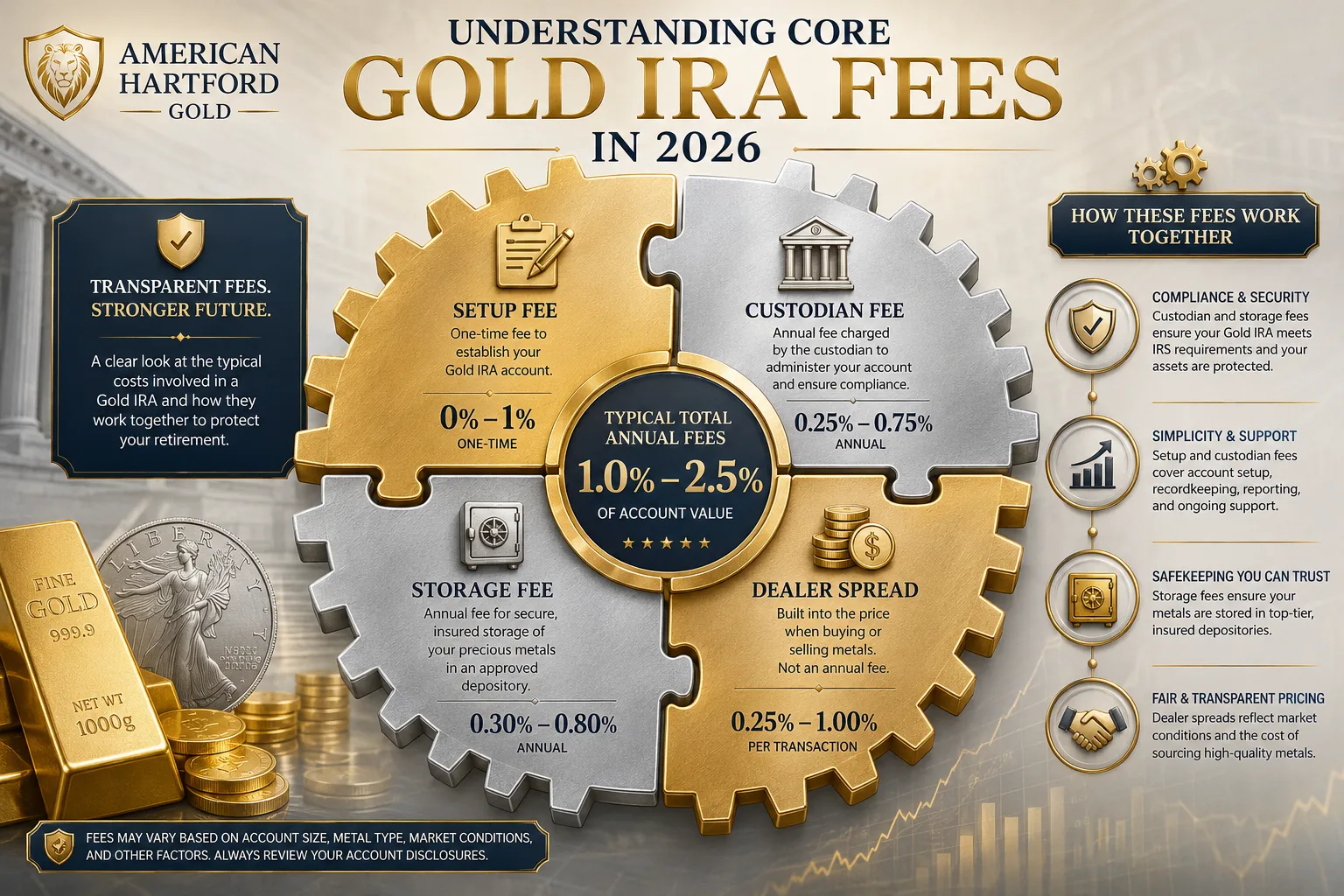
Storage is only one part of the total cost of a Gold IRA. Custodian administration fees, dealer markups, transaction charges, and buyback spreads also matter. The Gold IRA fee calculator guide covers the full cost picture, while this page focuses on the storage component. Whose schedule each charge belongs to is a documentary question, and the method for comparing a custodian’s own documents sets out where to find it.
Flat Fees vs Percentage-Based Fees
Storage fees generally follow one of two models, and the difference matters most as an account grows.
- Flat annual fee: a fixed dollar charge each year regardless of account value. A flat fee stays constant as the account grows, so it becomes a smaller percentage of a larger balance.
- Percentage-based fee: a charge calculated as a percentage of account value. This model rises as the account value rises, so a growing account can face higher storage costs even if the metals are unchanged.
Neither model is universally cheaper. A flat fee can be a larger percentage burden on a small account, while a percentage-based fee can grow costly on a large account. The calculator above lets investors test both against their own account size and holding period.
Segregated vs Commingled Storage Cost
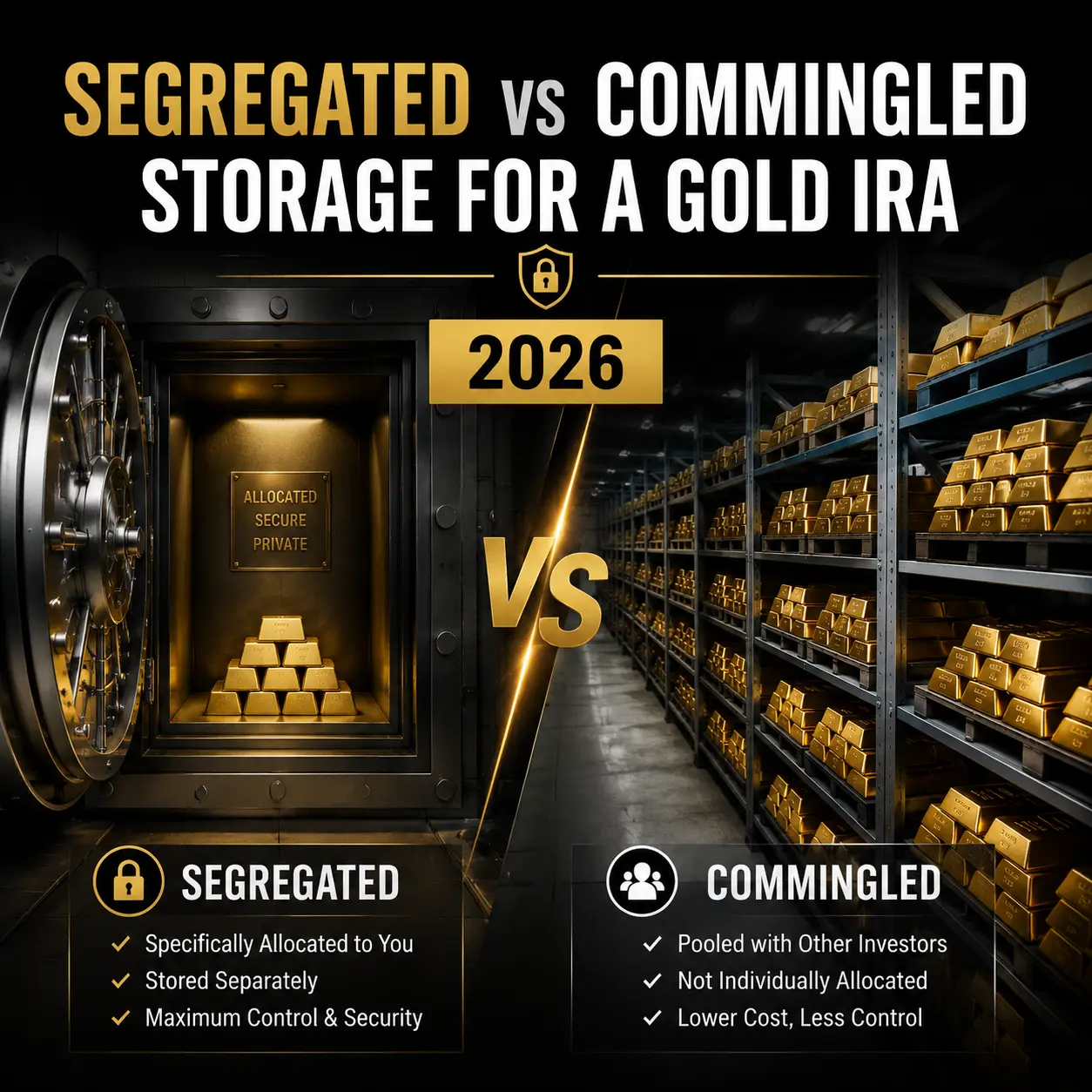
Depositories often offer two arrangements. In commingled (also called non-segregated) storage, an account's metals are held alongside metals of the same type belonging to other customers, with the account entitled to an equivalent quantity. In segregated storage, the specific bars or coins purchased for the account are held separately and identified as belonging to that account. Segregated storage often carries a higher fee because of the additional handling and space required.
The higher segregated fee is not automatically a worse deal, and commingled storage is not automatically better. The choice involves non-financial factors such as how metals are identified, returned, and audited, which should be verified in the depository agreement. The segregated vs commingled storage guide explains those trade-offs in detail, while the storage-options comparison guide covers legal standing, insurance and audit trail across depository, bank-box and home-storage arrangements. This calculator only estimates the cost difference so it can be weighed alongside those non-financial factors.
Why Storage Cost Drag Hits Smaller Accounts Harder
Because a flat storage fee does not change with account size, the same dollar charge represents a larger share of a smaller account. For example, a flat annual storage fee is a higher percentage of a modest balance than of a large balance. The calculator shows storage cost as both a dollar figure and a percentage of the account, which makes this drag easier to see. Over a long holding period, a recurring percentage cost compounds into a meaningful cumulative total, which is why storage should be modeled across the full expected holding period rather than a single year.
Gold and other metals can rise or fall in value, and storage fees are only one factor in the overall outcome. Fee estimates are not performance projections. Past performance does not guarantee future results.
Compare the full toolkit
This is one of several educational calculators covering fees, RMDs, allocation, and more.
See All Calculators →How to Compare Storage Quotes From Providers
- Ask for the fee model in writing. Confirm whether storage is a flat annual charge or a percentage of account value, and how often it is billed.
- Ask what the fee includes. Check whether insurance, audits, and reporting are bundled, billed separately, or subject to limits and exclusions.
- Compare segregated and commingled options. Request both fees and confirm how metals are identified and returned under each.
- Model the full holding period. Use the calculator to compare cumulative cost, not just the first year.
- Separate storage from other costs. Storage is one line item; custodian fees and dealer spreads also affect total cost. See the fees and hidden costs guide.
Customers should speak to a financial or tax advisor before making decisions about retirement accounts, storage arrangements, rollovers, or allocation. Goldco does not offer tax or legal advice.
Frequently Asked Questions
What does a Gold IRA storage fee calculator do?
It estimates the annual and cumulative cost of storing precious metals at an approved depository, based on account size, holding period, and whether the storage fee is a flat annual charge or a percentage of account value. It is an educational estimate, not a provider quote.
Are Gold IRA storage fees flat or percentage-based?
Both models exist. Some depositories charge a flat annual storage fee, while others charge a percentage of the account value. Flat fees stay constant as the account grows; percentage-based fees rise with account value. Investors should confirm the model in writing.
Is segregated storage more expensive than commingled storage?
Segregated storage, where specific bars or coins are held separately for the account, often carries a higher fee than commingled storage. The calculator lets users compare both, but neither option is presented as better; the trade-offs should be verified with the provider.
Do storage fees include insurance?
Sometimes, but not always. Some depositories bundle insurance into the storage charge while others bill it separately or apply coverage limits and exclusions. Investors should ask what the quoted storage fee includes before comparing quotes.
Why do storage fees matter more for smaller accounts?
A flat annual storage fee is a larger percentage of a small account than a large one, so the cost drag felt by a smaller account can be higher in percentage terms. The calculator shows the fee as both a dollar amount and a percentage of account value.
Can metals be stored at home to avoid the fee?
Metals held inside an IRA generally must be kept at a depository under the trustee's control, not at home. Home storage of IRA metals carries tax and compliance risks. Customers should speak with a financial or tax advisor before making decisions.
Methodology and Limitations
Methodology. For a flat fee, the tool multiplies the annual fee by the holding period (optionally growing it by an assumed annual increase). For a percentage-based fee, it applies the percentage to the account balance each year. The first-year cost is shown in dollars and as a percentage of the entered balance, and the cumulative total sums each year across the holding period. Two options can be compared side by side to show a segregated-versus-commingled style difference.
Assumptions and limitations. The account balance is held constant across the projection unless an annual fee increase is entered, and metal price movement is not modeled. The estimate excludes custodian administration fees, dealer markups and buyback spreads, transaction and wire charges, taxes, and any insurance billed separately. All inputs are chosen by the user, so no figure represents a specific provider's pricing or a forecast. This tool is educational only, is not a provider quote or a suitability assessment, and should support discussion with a qualified professional rather than serve as the basis for a decision. Customers should request written fee schedules and speak with a financial or tax advisor. Past performance does not guarantee future results.
Tool reviewed and edited by Daniel M. — editor, 401kToGoldIRA.org. Educational only; not tax or legal advice, and not a provider quote.