How to Sell Gold From an IRA: 2026 Liquidation and Distribution Benchmark
Selling gold from an IRA begins with the account owner sending sale or distribution instructions to the custodian: the metal may be sold with the proceeds retained as IRA cash, the proceeds may be distributed, or the metal itself may be distributed in kind — and tax and RMD consequences arise when value leaves the IRA rather than when metal is sold inside it. Getting money or metal out of a physical Gold IRA is not a standardized transaction. This benchmark compares the two exit routes — cash and in-kind — on process, timelines, fees, buyback spreads, and RMD mechanics, using only published custodian, depository, IRS, and FINRA sources. Where no defensible public figure exists, it says so rather than inventing an average.
View the Comparison →Educational only: This dataset describes published provider processes and IRS rules in general terms. It is not tax, legal, or financial advice, and it does not recommend a distribution route. Figures are provider-specific observations or clearly-labeled derived estimates, not industry averages. Customers should speak to a financial or tax advisor about their own circumstances. Goldco does not offer tax or legal advice. Past performance does not guarantee future results.
A cash exit that requires selling metal runs a research-derived ~6–20 business days across published custodian stages. An in-kind exit ranges from a 1–2 day initial review to a stated 6–8 week total — there is no single "typical" timeline.
Timelines from published STRATA, Entrust, and NDTCO process pages; the 6–20 day figure is an arithmetic synthesis of published stages, not a guarantee. RMD rules per IRS Publication 590-B.
Key takeaways
- Exiting is not a single transaction. A cash exit runs through several published custodian stages, and adding those published stages together gives roughly 6–20 business days. That figure is an arithmetic synthesis of published steps rather than a guaranteed timeline.
- An in-kind exit, where the metal itself is shipped rather than sold, ranges from a stated 1–2 day initial review to a stated 6–8 weeks in total. There is no single typical timeline, and the spread between providers is wide enough that it should be asked about before an account is opened.
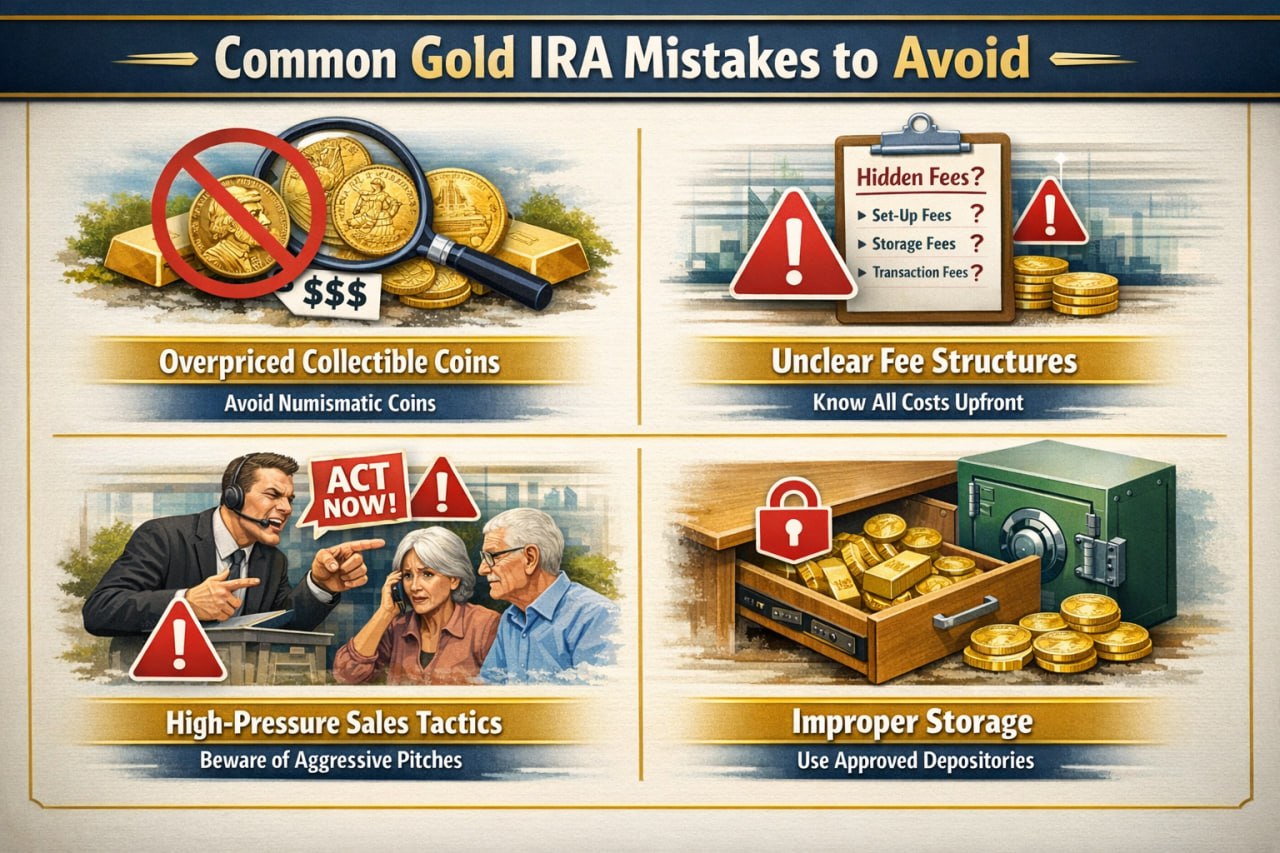
- The exit carries its own cost. FINRA confirms the mechanism plainly: dealers sell above spot and buy below spot, and each dealer sets its own spread. This is why the entry premium alone does not determine when a position breaks even.
- No independent, audited, market-wide buyback discount could be verified for this page. The absence of a public benchmark is itself the finding, and it means an exit cost cannot be estimated from published information.
- Required minimum distributions apply to a physical metals IRA in the same way they apply to any traditional IRA, but the asset cannot be divided to meet them, which makes the interaction between an illiquid holding and an annual distribution obligation a planning question rather than a paperwork one.
- Every figure on this page carries an explicit evidence label, separating IRS or current custodian sources from single-provider observations and from derived estimates. Figures that could not be sourced are named rather than filled in.
Quick Answer: Exiting a Gold IRA Is a Multi-Stage Process
A Gold IRA exit is two economic events, not one. A cash distribution requires selling the metal inside the IRA (a dealer quote, custodian sale direction, depository transfer or shipment, and dealer remittance) and then a separate cash distribution. An in-kind distribution skips the sale and ships the physical metal out, valued at fair market value for 1099-R reporting. The IRS/RMD side of this is well documented; the dealer-spread, shipping-cost, and total-exit-time side is not standardized across the industry. This page separates published facts, single-provider observations, clearly-derived estimates, and honest data gaps.
- Primary/current — IRS or a current published custodian/depository schedule or process page.
- Provider observation — a figure published by ONE provider; not a universal average.
- Derived estimate — arithmetic synthesis from published stages; shown with its derivation, not a provider commitment.
- Not sourceable — no defensible public figure found; the gap is stated, never filled with a synthetic number.
How to Sell Gold From an IRA: Step by Step
The sequence below follows the stages published by the custodian and depository process pages cited further down this page, together with the IRS rules on distributions and required minimum distributions. Each stage is a step an account owner completes or authorises; none of the steps carries a universal processing time, a guaranteed buyback, a fixed spread or a standard fee, because no published source establishes one across providers.
- Identify which instruction is actually being given. Three different transactions are routinely described as “selling gold”: liquidation inside the IRA with the proceeds retained as IRA cash; liquidation followed by a cash distribution out of the account; and an in-kind distribution of the metal itself. Only the second and third move value out of the IRA, and that distinction governs the tax treatment for every later stage.
- Obtain and submit the custodian’s current sale or distribution direction form. The published custodian process pages require a written direction identifying the account, the metal and the instruction. Signature, notarisation or medallion-guarantee requirements are set by the individual form, so the requirement should be read off the current form rather than assumed — this page does not assert a universal signing standard.
- Confirm who executes and who transports. Three parties act in different capacities: the custodian administers the account and processes the direction, a dealer provides the bid and buys the metal, and the depository holds and releases or ships it. The custodian does not set the bid, and the depository does not price the metal. Where a dealer relationship exists, it is a business arrangement rather than a guarantee of the price obtained.
- Settlement of a sale inside the IRA. Where metal is sold and no distribution is requested, the proceeds settle as cash inside the IRA. That step alone is not a distribution and does not create a taxable event; value has changed form but has not left the account.
- Cash or in-kind distribution, and its consequences. Where cash or metal is distributed, the amount or the fair market value of the metal is reportable, and ordinary-income treatment, the additional tax on early distributions before age 59½ and required-minimum-distribution mechanics may all apply according to the account type and the owner’s circumstances. An in-kind distribution is valued for reporting even though no sale occurred. The rules governing the amount and its timing are set out in IRS Publication 590-B and the IRS required-minimum-distribution FAQs; because the outcome depends on account type, age, basis and the composition of other IRAs, a qualified tax professional is the appropriate check before an instruction is authorised.
- Reconcile the records. The custodian statement, the dealer invoice or trade confirmation showing the bid and the spread applied, any custodian, shipping or insurance charges, and the resulting Form 1099-R and Form 5498 reporting should be read against one another. A reconciliation that cannot account for the difference between the metal’s quoted value and the amount received is the point at which the spread and the fees become visible.
Timing and triggers — whether a sale should happen at all in a given year — are a separate question from this procedure, covered in when to start selling gold from an IRA. Where the sale is driven by an immediate cash need rather than a plan, the options and their penalties are set out in what happens when cash is needed from a Gold IRA. Readers who have not yet opened an account can compare these routes in advance through Gold IRA exit strategies.
Cash vs In-Kind Distribution: Side-by-Side
| Factor | Cash distribution | In-kind distribution |
|---|---|---|
| Core process | Dealer quote → sale direction → depository transfer/shipment → dealer proceeds → cash distribution. | Distribution request → fee/shipping quote → approval → depository shipment → 1099-R reporting. |
| Published timing | 2–5 business days if cash is already in the IRA. With liquidation, one custodian (STRATA) publishes 5–13 business days for the transfer/liquidation stage, dealer remittance within 5 business days, then 24–48 hours for the cash payout. | STRATA: up to 5 business days for shipment preparation. Entrust: 1–2 business days for initial review. NDTCO: 6–8 weeks for all precious-metals distribution requests. |
| Research-derived total | ~6–20 business days from a complete sale direction to cash payout (arithmetic synthesis of published STRATA stages — not a provider guarantee). | No comparable derived total — public figures measure different stages across providers. |
| Main cost layers | Dealer bid discount/spread; possible custodian transaction fee; depository shipping/handling to dealer; wire/check fee; possible termination fee. | Distribution/partial-transfer fee where applicable; insured shipping and handling; possible termination fee. |
| Valuation | Sale price set by the dealer's purchase order; proceeds become IRA cash. | Reported value uses the custodian/depository fair-market-value procedure at distribution; published operational dates differ by provider. |
| Tax note | Traditional IRA cash distributions are generally taxable as ordinary income except basis; qualified Roth distributions can be tax-free. | Distribution reported at fair market value; Roth distributed property receives basis equal to FMV on the distribution date; traditional taxability follows ordinary rules. |
Timing figures are single-provider published observations (STRATA, Entrust, NDTCO) unless labeled derived. Providers publish different stages, so the two routes cannot be reduced to one universal timeline.
The Cash Route, Stage by Stage
A cash distribution is a dealer sale followed by an IRA distribution — the sale proceeds normally remain IRA cash until a separate distribution request is processed. One custodian (STRATA) publishes the clearest stage breakdown: a 5–13 business-day transfer/liquidation stage, dealer remittance within 5 business days after the dealer receives the metals, and a 24–48 hour cash payout after proceeds and complete paperwork arrive. Adding those published stages arithmetically gives a research-derived ~6–20 business-day window (lower bound = same-day remittance after the 5-day minimum; upper bound = every published maximum). That derived figure is not a provider guarantee, and other custodians differ. When cash is already sitting in the IRA, STRATA publishes a shorter 2–5 business-day distribution window.
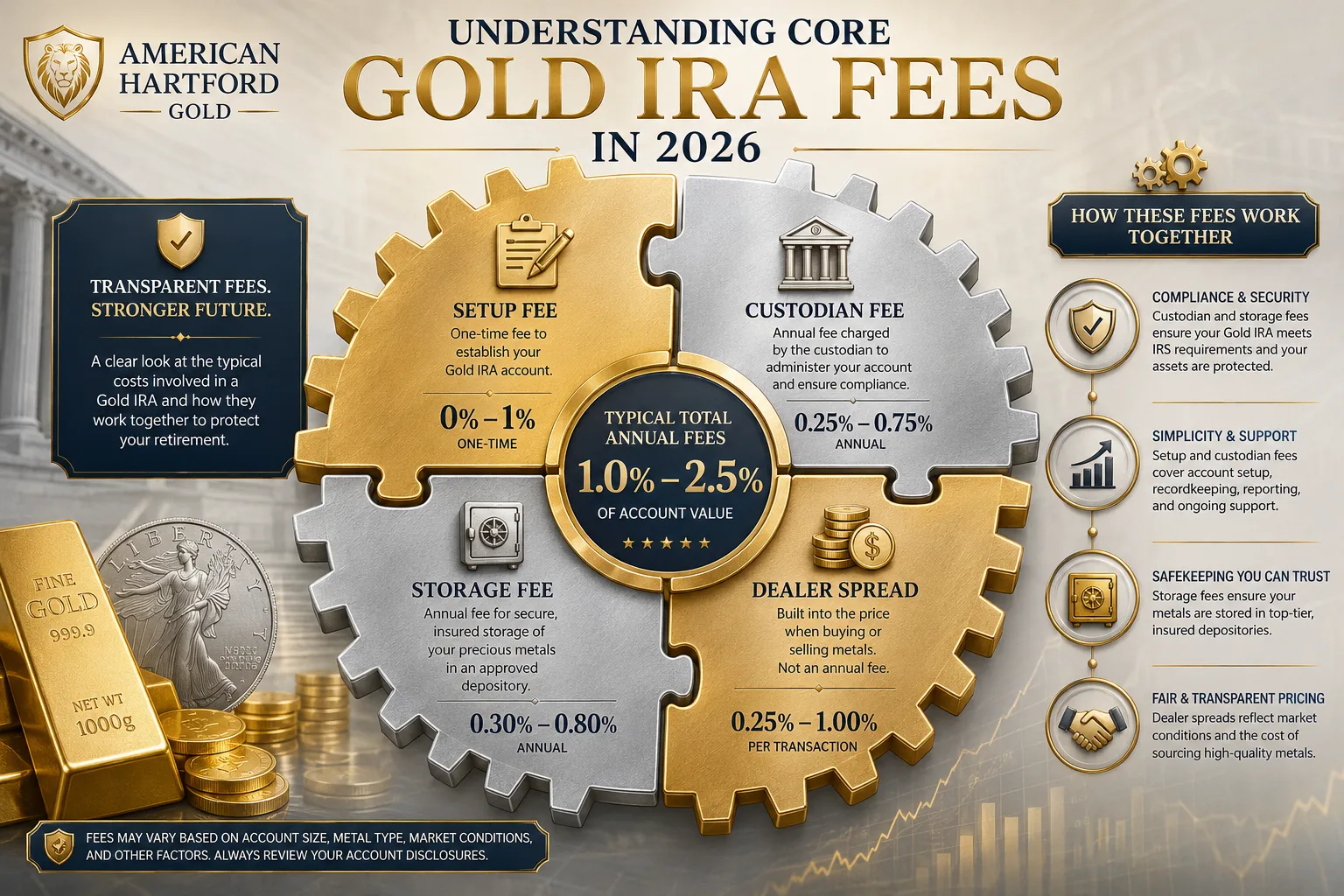
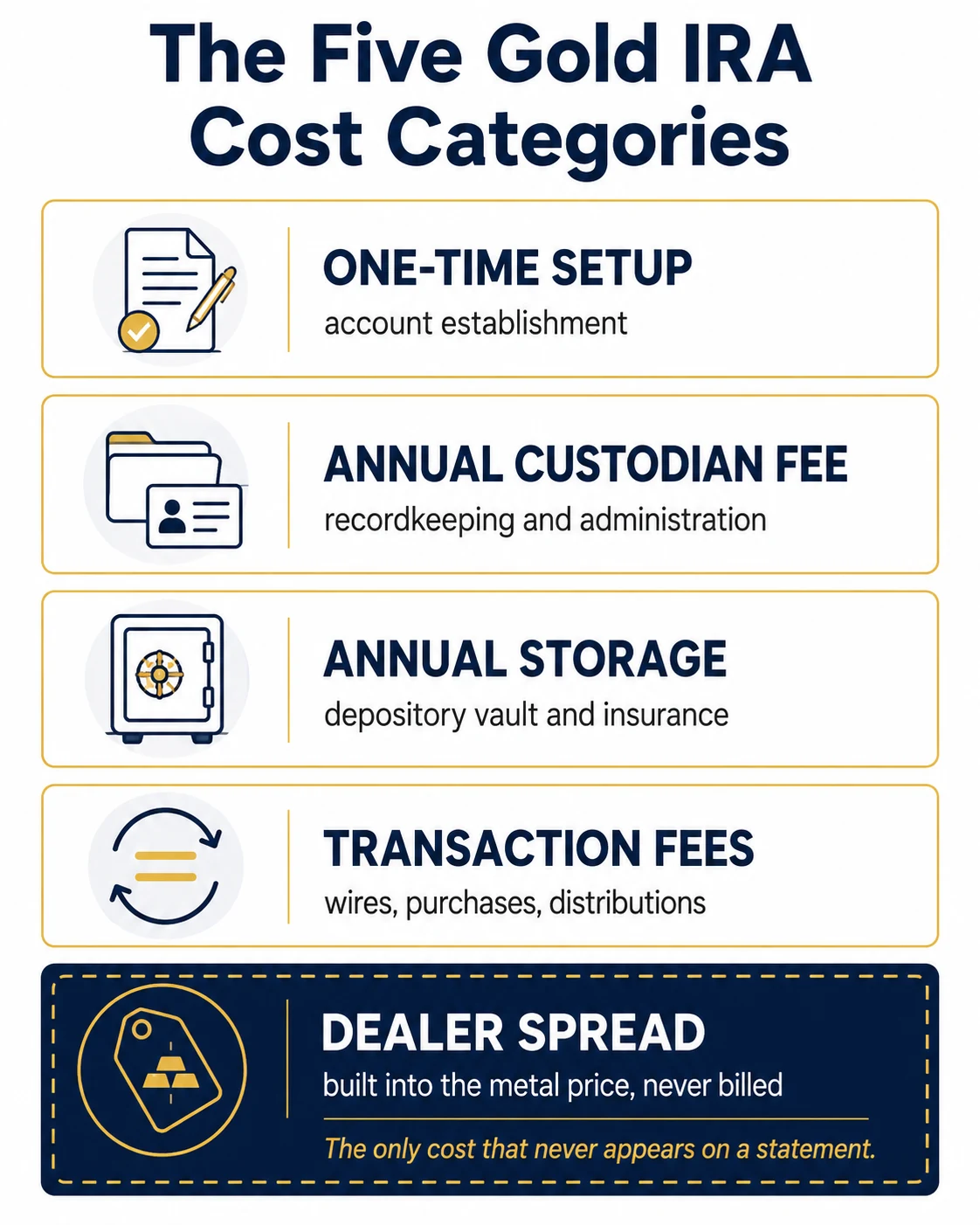
The cash-route cost layers are the dealer buyback spread (the biggest and least standardized), a possible custodian sale fee (some publish $0 for metals sales), depository shipping/handling to the dealer, a wire or check fee, and a possible account-termination fee on a full exit. Model the buyback side on the buyback calculator and see the spread mechanics in markups and spreads.
The In-Kind Route, and Why Timelines Vary So Much
An in-kind distribution moves the physical metals out without selling them; they become personally-held property once the custodian and depository complete the distribution and tax reporting. The published timings are strikingly different: STRATA allows up to 5 business days for shipment preparation, Entrust publishes a 1–2 business-day initial review before shipping quotes, and NDTCO currently states a 6–8 week processing timeframe for all precious-metals distribution requests. Because these measure different stages, there is no defensible single "typical" in-kind timeline. Insured shipping is required (Delaware Depository insures shipments for full package value and requires an adult signature), but no fixed nationwide insured-shipping price could be sourced — costs depend on metal value, weight, destination, and carrier.
Buyback Spread at Exit
FINRA confirms the mechanism — dealers sell above spot and buy below spot, and each sets its own spread — but no independent, audited, market-wide median discount could be verified. The ranges below come from a single dealer-publisher benchmark (GoldSilver, June 2026) and should be read as directional context with attribution, not a market average.
| Product type | Published bid below spot | Limitation |
|---|---|---|
| Sovereign-mint bullion coins | 1–2% below spot | Dealer-publisher benchmark; not independently audited. |
| Recognized-refiner 1 oz bars | 1–2% below spot | Brand, assay packaging, and condition can affect bids. |
| Larger bars (10 oz, kilo, 100 oz) | about 1% or less | Directional context; large-bar liquidity varies. |
| Generic rounds / lesser-known bars | 2–4% below spot | Product recognition and resale demand vary. |
| Numismatic / graded coins | 10%+, highly variable | A caution about wide variability, not a normal range. |
| Modern proof coins (as a class) | Not sourceable as a universal range | Too heterogeneous for one defensible public figure. |
Source: GoldSilver "Understanding Buyback Spreads" (June 2026), a dealer-publisher benchmark. FINRA supports the spread mechanism and dealer-to-dealer variability, not these specific ranges. FINRA separately notes fraudulent dealers have charged spreads above 300% while others charge under 20% — a regulatory-warning range, not a normal benchmark. Always compare a written same-day buyback quote against spot and competing dealers.
RMD Mechanics for a Physical Gold IRA
For 2026, the general RMD starting age is 73, rising to 75 for people born in 1960 or later, and the annual amount is generally the prior December 31 IRA value divided by the applicable IRS life-expectancy factor (Uniform Lifetime Table III in most cases). Original Roth IRA owners take no lifetime RMDs. The operational challenge is that the RMD is a dollar amount while the account holds coins or bars, so it needs a defensible year-end valuation and enough distributable value. It can be satisfied three ways: partial liquidation (sell metal for cash, then distribute cash), an in-kind distribution of specific coins or bars at fair market value, or aggregating traditional IRA RMDs and taking the total from another traditional IRA while the metals stay in place. A missed or insufficient RMD can trigger a 25% excise tax on the shortfall, potentially reduced to 10% when corrected within the statutory window. Model the amount on the RMD calculator and see strategy in the RMD strategy guide.
A valuation nuance worth confirming in writing: published custodian procedures differ on the in-kind valuation date — one page says fair market value when the depository processes the distribution, a form says spot value on the day the metals leave the IRA, and another custodian says the value on the day the form is signed. Because those dates differ, an account holder using an in-kind distribution to hit an exact RMD amount should obtain the custodian's written valuation method first. Customers should speak to a financial or tax advisor before making decisions involving RMD calculations, valuation, aggregation, or corrections. Goldco does not offer tax or legal advice.
Fee & Timeline Inputs (Provider-Cited)
| Input | Published observation | Provider | Label |
|---|---|---|---|
| Precious-metals sale/exchange fee | $0 | Entrust (sched. rev. 01/2026) | Provider observation |
| Precious-metals buy/sell/exchange fee | No fee | GoldStar (sched. rev. 12/2025) | Provider observation |
| Wire fee | $30 (Entrust) / $50 (GoldStar) | Two schedules | Observed sample ($30–$50), not an industry average |
| PM liquidation / in-kind shipping handling | $10 + actual shipping | GoldStar | Provider observation |
| Partial transfer / in-kind distribution | $75 | GoldStar | Provider observation |
| Account termination | $150 (GoldStar) / $250 (Entrust) | Two schedules | Observed sample ($150–$250), not an industry average |
| Cash distribution (cash already in IRA) | 2–5 business days | STRATA | Provider observation |
| Liquidation / transfer stage | 5–13 business days | STRATA | Provider observation (stage) |
| In-kind processing (full) | 6–8 weeks | NDTCO (updated 06/2026) | Provider-specific total |
| Fixed nationwide insured-shipping range | Not sourceable | — | Research gap — stated, not estimated |
These are provider-specific schedule observations verified 2026-07-10, not industry averages. Provider schedules change without notice — reverify against the current schedule before relying on any figure. Full cost picture by account size is in the fees benchmark.
Download the Distribution Benchmark (CSV)
This page covers the way out. Whether a given retirement account can get in — which account types can roll into a gold IRA at all, and under what conditions — is the companion question, answered in the rollover eligibility matrix.
Figures That Could Not Be Reliably Sourced (An Honest Data Gap)
The absence of a public benchmark is itself a useful finding. No defensible public figure was found for: a market-wide average dealer buyback discount from an audited sample; a universal proof-coin buyback discount (proofs and graded coins are too heterogeneous); a fixed nationwide insured-shipping range for in-kind distributions; a universal end-to-end in-kind timeline; a universal liquidation transaction fee; or a reliable average account close-out fee across the whole custodian market. This page deliberately shows provider observations and source dates rather than averaging incomparable fees, stages, or product classes into a synthetic number.
Methodology
Research date 2026-07-10. Primary regulatory authority: current IRS Publication 590-B and the IRS RMD FAQs. Operational evidence: public custodian and depository process pages and fee schedules (STRATA Trust, The Entrust Group, GoldStar Trust, New Direction Trust Company, Delaware Depository). Market-spread evidence: FINRA for the mechanism and risk framing, and GoldSilver for a dated dealer-publisher product-range benchmark. No unpublished interviews, private quotes, affiliate claims, or synthetic estimates were used. A figure is labeled "derived" only where the arithmetic can be reproduced directly from published stage timings or fee schedules. Provider schedules and processing times change without notice; all fee, timeline, RMD, penalty, and threshold figures should be rechecked immediately before use.
Primary Sources
- Internal Revenue Service. Publication 590-B (Distributions from IRAs).
- Internal Revenue Service. RMD FAQs.
- FINRA. 10 Things to Ask Before Buying Physical Gold, Silver or Other Metals (buyback-spread mechanism).
- Custodian and depository process/fee pages (recheck current schedules directly): STRATA Trust, The Entrust Group, GoldStar Trust, New Direction Trust Company, Delaware Depository.
How to Cite This Page
Source: 401ktogoldira.org — Gold IRA Distribution Benchmark (cash vs in-kind timelines, fees, RMDs).
https://401ktogoldira.org/gold-ira-distribution-benchmark/
Underlying sources: IRS Pub 590-B; IRS RMD FAQs; STRATA Trust; The Entrust Group; GoldStar Trust; NDTCO; Delaware Depository; FINRA; GoldSilver.
Frequently Asked Questions
How long does it take to get cash out of a Gold IRA?
It depends on the route. If cash is already available in the IRA, one custodian (STRATA) publishes a 2 to 5 business-day window. If metals must first be sold, the published stages produce a research-derived window of roughly 6 to 20 business days — an arithmetic synthesis of published stages, not a provider guarantee, and other custodians differ.
What is a typical Gold IRA buyback spread at exit?
No independent, market-wide median could be verified. FINRA confirms dealers buy below spot and each sets its own spread. A dealer-publisher benchmark reports roughly 1–2% below spot for sovereign-mint coins and recognized 1 oz bars, about 1% or less for larger bars, 2–4% for generic rounds, and 10% or more for numismatic or graded coins — a single publisher's ranges, not an audited average.
How is an RMD taken from physical gold?
The RMD is a dollar amount while the account holds coins or bars, so it needs a year-end valuation and enough distributable value. It can be satisfied by partial liquidation, an in-kind distribution valued at fair market value, or by aggregating traditional IRA RMDs and taking the total from another traditional IRA while the metals stay in place. Confirm the custodian's written valuation method and speak with a tax advisor.
Is an in-kind distribution faster than selling for cash?
Not necessarily. Published in-kind figures range from a 1–2 business-day initial review (Entrust) to a stated 6–8 week total processing timeframe (NDTCO), and they measure different stages. In-kind avoids the dealer spread but adds insured shipping cost and leaves future sale costs and market risk with the recipient.
What fees apply when exiting a Gold IRA?
Published provider schedules show layers that may include a custodian sale/liquidation fee (some publish $0 for metals sales), depository shipping/handling ($10 plus actual shipping at one custodian), a wire fee (observed $30–$50), and an account-termination fee on a full close-out (observed $150–$250) — provider-specific observations, not industry averages, plus the dealer buyback spread on a cash route.
Update Log
- July 2026: Initial benchmark published — cash vs in-kind comparison, stage timelines, buyback-spread benchmark, provider-cited fee inputs, RMD mechanics, and an explicit "not sourceable" section. All figures provider-cited or labeled derived; no synthetic averages.
- August 2026: Downloadable CSV added; schema completed with publisher and access fields. No figures changed — provider schedules carry their own revision dates in the inputs table.
Reviewed and edited by Daniel M. — editor, 401kToGoldIRA.org. Sourced to IRS.gov, FINRA, and published custodian/depository schedules; educational only, not tax or legal advice.